
2026 Top ESS Connector Types for Global Buyers?

The global energy-storage market is entering a more demanding phase in 2026. Buyers now need connectors that handle higher currents, tighter spaces, and harsher outdoor conditions. An Ess Connector is no longer a small purchasing detail. It affects safety, installation time, maintenance access, and long-term system reliability.

Dr. Robert McCauley, a battery-system interconnection consultant, states, “A connector should be selected as part of the battery architecture, not added after the design is finished.” That principle deserves attention. The best choice depends on voltage class, current rating, touch protection, cable size, thermal behavior, and service requirements. Some projects need high-current busbar connectors. Others favor modular plug-and-play interfaces, signal connectors, or pre-assembled cable systems. There is no universal winner.

This guide examines the leading ESS Connector types for global buyers in 2026. It considers copper and aluminum compatibility, IP protection, locking methods, vibration resistance, and field-replacement needs. It also compares connector performance across residential storage, commercial cabinets, utility-scale containers, and battery swapping equipment. Small details matter. A weak latch can delay commissioning. Poor sealing can invite moisture. An oversized connector can waste valuable cabinet space.

Specifications alone can mislead. Real installations are rarely perfect. Technicians work in dust, rain, heat, and limited access. Buyers should question optimistic datasheets and request test evidence. Regional standards, installer habits, and supplier support also influence the final decision. This is where careful evaluation becomes practical, not theoretical.
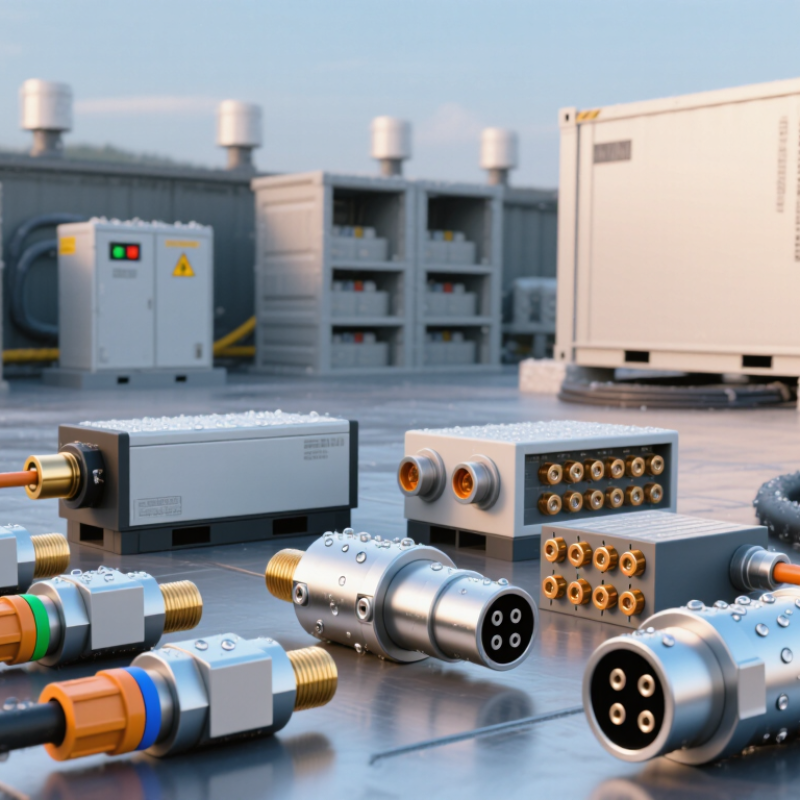
2026 Top ESS Connector Types for Global Buyers?

ESS Connector Basics and Their Role in Energy Storage Systems

Energy storage system connectors are small, but their responsibility is substantial. They carry high current between battery modules, busbars, inverters, and protection devices. They also preserve insulation during vibration, heat cycles, and maintenance.

Common ESS connector types include crimped cable connectors, bolted busbar links, board-to-board connectors, and high-voltage interconnects. Signal connectors support temperature sensors, battery management systems, and communication lines. Touch-safe designs reduce accidental contact risks inside crowded cabinets. IEC 62933 guidance highlights system-level safety, not just component performance. That distinction matters. A connector can pass a factory test and still fail after repeated thermal expansion.

The International Energy Agency reported in Batteries and Secure Energy Transitions that global battery storage capacity may need to increase fourteenfold by 2030 under its net-zero pathway. This expansion increases demand for reliable, serviceable connection systems. Buyers should check rated voltage, continuous current, short-circuit capability, contact resistance, ingress protection, and mating cycles. Crimp quality deserves close inspection; weak crimping creates heat at the contact point. Field engineers often discover this late. That is an avoidable lesson.

The U.S. Department of Energy’s Long Duration Energy Storage Liftoff report identifies grid-scale storage as a rapidly developing market, with cost and reliability still closely linked. Connector selection should therefore include thermal imaging, torque verification, salt-mist testing, and cable-bend evaluation. A perfect specification sheet is not enough. Installation habits matter. Occasionally, the simplest connector layout proves the hardest to service.

Key Connector Types Used in Modern ESS Designs

2026 Top ESS Connector Types for Global Buyers

Key Connector Types Used in Modern ESS Designs

Modern energy storage systems use several connector families, each serving a distinct electrical or mechanical task. Busbar connectors carry high current between battery modules, racks, and power conversion equipment. Battery terminal connectors support secure cell or module connections. High-voltage power connectors often include touch-proof housings and integrated interlock circuits. Safety matters here.

Signal connectors handle temperature sensors, voltage monitoring, and battery management communication. Low-voltage control connectors may use compact pin layouts for limited cabinet space. Shielded versions can reduce interference near switching equipment. Engineers should confirm contact resistance, rated voltage, current capacity, and mating cycles before approval.

Outdoor ESS cabinets commonly require sealed circular connectors or waterproof rectangular connectors. Their protection rating should match dust, rain, condensation, and cleaning conditions. Vibration resistance also deserves attention during transport and operation. A connector can meet its rating and still fail after poor cable routing. That is an easy mistake.

Global buyers should review creepage distance, clearance, flame resistance, locking strength, and service access. Regional installation rules may affect material and testing requirements. In real commissioning work, technicians often value clear polarity marks more than elegant housing design. I have seen hurried assembly create avoidable rework. The cheapest connector is rarely the lowest-cost choice after maintenance begins.

How to Match Connectors with Voltage, Current, and Safety Needs

2026 Top ESS Connector Types for Global Buyers

Connector selection starts with the battery’s actual electrical profile, not its brochure rating. Busbar and stud connectors suit high-current cabinet links. Circular connectors fit sensors, controls, and auxiliary power. High-voltage connectors need touch-safe housings and reliable interlocks. The IEA’s 2024 Batteries and Secure Energy Transitions report recorded about 42 GW of new battery storage in 2023, nearly double the previous year. More installations mean less tolerance for weak connection design.

Match the connector’s continuous current to measured operating loads, then check short-term peaks. A 300-amp connector may require derating at 50°C, inside a crowded cabinet. Confirm voltage rating under maximum system voltage, switching conditions, and insulation coordination. IEC 60664 guidance supports creepage and clearance evaluation. For battery systems, IEC 62933 and relevant product safety requirements also deserve review. IP protection, polarization, finger safety, locking force, and DC arc control matter during maintenance. A perfect datasheet match can still fail after vibration or repeated thermal cycling.

Tips Ask suppliers for temperature-rise curves, mating-cycle tests, and fault-current evidence. Check cable bend radius on the real cabinet. Keep spare connectors from the same validated configuration. In field work, I have seen polarity labels become unreadable before the connector failed. That small detail deserves attention. Recheck assumptions.

Global Standards and Certification Requirements for ESS Connectors

By 2026, ESS connector selection will depend less on current rating alone. Global buyers must verify standards, testing scope, and installation conditions. The IEA’s Batteries and Secure Energy Transitions report (2024) states that battery storage capacity may need to rise from 86 GW in 2023 to 1,200 GW by 2030. That growth increases pressure on connector safety and traceability.

For grid-connected systems, IEC 62933-5-2 addresses safety requirements for electrochemical energy storage systems. IEC 61984 supports connector safety evaluation, while IEC 60529 defines IP protection levels against dust and water.

In North American projects, UL 1977 may apply to component connectors, while UL 1973 covers battery systems and UL 9540 evaluates complete energy storage systems. UL 9540A provides thermal runaway test methods, and NFPA 855 guides installation and fire protection requirements.

Scope matters. A connector certified for a component may not certify the entire ESS. Buyers should request certificates, test reports, material specifications, and production traceability. Check creepage distance, clearance, touch protection, locking force, temperature rise, and short-circuit performance. Field experience shows that moisture often enters through poorly sealed cable interfaces, not the connector body. IP ratings also depend on correct assembly.

Ask for evidence.

Testing at the intended voltage, current, altitude, and temperature is essential. A perfect datasheet can still hide an installation mismatch. Certification databases and accredited laboratory reports deserve careful review, especially when regional requirements differ.

How to Select Reliable ESS Connectors for 2026 Projects

Selecting reliable ESS connectors for 2026 projects requires more than matching voltage and current ratings. The IEA’s Batteries and Secure Energy Transitions report (2024) indicates that global energy storage capacity must expand sixfold by 2030. That growth increases pressure on connection systems, especially in high-cycle containerized storage.

Start with the installation environment. Choose cable-to-cable, busbar, signal, or board-to-cable connectors according to the cabinet layout. Check continuous current, peak current, temperature derating, and short-circuit withstand time. A connector rated at 200 amperes may deliver less inside a 50°C enclosure. Confirm IP protection under IEC 60529, touch safety, creepage distance, and locking strength. Small details matter.

Use products tested against relevant requirements, including IEC 61984 and applicable energy-storage connector standards. Request evidence for thermal cycling, vibration, humidity, salt mist, and mating-cycle performance. UL Research Institutes’ battery safety research highlights how electrical faults can escalate through heat and damaged interfaces. Field commissioning records also show that loose terminals and poor cable support remain common failure points. The uncomfortable truth: a connector can pass a catalog test and still disappoint during maintenance. Require sample testing with the actual cable, torque method, enclosure, and installation tools. Document every deviation. Perfect selection is unlikely, but careless validation is avoidable.

2026 Top ESS Connector Types for Global Buyers? - How to Select Reliable ESS Connectors for 2026 Projects
ESS Connector Type Typical Electrical Range Primary ESS Location Typical Protection Level Main Advantages Key Selection Requirements Relevant Technical References
High-Voltage Battery Power Connector 400–1,500 V DC
50–500 A continuous
Higher short-duration current may be available
Battery rack, battery cabinet, pack-to-busbar connection, and containerized ESS IP65–IP69K
When correctly mated and sealed
Touch-safe design, keyed polarization, vibration resistance, and fast maintenance disconnection Rated voltage at the maximum DC operating condition; continuous and peak current; creepage and clearance; touch protection; HVIL compatibility; mating-cycle life; temperature rise; short-circuit withstand capability IEC 61984; IEC 60664-1; applicable local low-voltage and high-voltage safety requirements
Low-Voltage Battery Module Connector 24–150 V DC
30–200 A continuous
48 V systems, battery modules, rack-level parallel connections, and auxiliary DC distribution IP54–IP67 Compact size, relatively low contact resistance, easy assembly, and suitability for modular battery replacement Voltage and current margin; contact heating; reverse-polarity prevention; cable flexibility; locking force; compatibility with lithium-ion battery enclosures IEC 61984; IEC 60664-1; relevant enclosure and wiring regulations
Single-Pole Quick-Disconnect Power Connector 600–1,500 V DC
50–350 A continuous
Temporary test equipment, battery service connections, parallel battery strings, and field-replaceable power interfaces IP20–IP67
Depending on the housing and mated configuration
Fast manual connection, clear color or mechanical coding, and convenient maintenance access Use only with a suitable disconnect procedure; verify finger-safe construction, connector gendering, cable size, current derating, and prevention of live unmated contacts IEC 61984; IEC 60664-1; installation rules for DC energy storage systems
Busbar, Stud, and Ring-Lug Power Termination Up to approximately 1,500 V DC
100–1,000 A or more, depending on the terminal and busbar design
Battery combiner, inverter DC input, main DC bus, fuse or breaker connection, and cabinet interconnection Usually inside an enclosure; enclosure protection commonly IP20–IP55 High current capacity, low electrical resistance, robust mechanical structure, and simple visual inspection Correct bolt grade and torque; washer configuration; plating compatibility; busbar thickness; creepage and clearance; anti-loosening method; protection against accidental contact IEC 61439 for low-voltage assemblies; IEC 60664-1; applicable conductor and terminal standards
Liquid-Cooled High-Current Connector 400–1,500 V DC
100–500 A continuous, depending on cooling capacity
High-power battery racks, containerized ESS, liquid-cooled power conversion equipment, and high-current DC links IP67–IP69K
For the electrical and fluid interfaces when properly installed
Higher continuous current density, reduced conductor temperature, and suitability for compact high-power equipment Coolant compatibility; leak detection; pressure and flow limits; electrical isolation from the cooling circuit; hose bend radius; thermal derating; serviceability and emergency isolation IEC 61984; IEC 60664-1; equipment-specific cooling and pressure requirements
HVIL and Auxiliary Contact Connector Typically up to 60 V DC for control circuits
Usually below 5 A per auxiliary contact
Battery pack lid, service disconnect, contactor feedback, emergency-stop loop, and cabinet interlock circuit IP54–IP67 Supports safe shutdown before high-voltage separation and provides connector or cover status feedback Positive contact sequencing; low contact resistance; fail-safe loop design; adequate creepage and clearance; vibration resistance; compatibility with the battery-management system IEC 61984; IEC 60664-1; functional-safety requirements applicable to the system design
Signal and Sensor Circular Connector Typically 30–300 V AC/DC
Up to approximately 10 A per contact
Multi-pin configurations commonly available
Temperature sensors, voltage taps, current sensors, door switches, cooling controls, and battery-management wiring IP65–IP68 Compact multi-pin layout, sealing against dust and water, reliable latching, and good cable-management options Pin count; contact plating; shielding; coding; conductor size; operating temperature; resistance to electrolyte vapor; required mating cycles and cable bend radius IEC 61076 series; IEC 60529; EMC and wiring requirements for the complete system
Industrial Ethernet or Fieldbus Connector Data transmission up to 1 Gb/s is common
PoE versions may support up to 60 V DC, subject to the selected specification
Battery-management network, energy-management controller, inverter communication, and container monitoring IP65–IP67 Fast commissioning, standardized network cabling, shielding options, and reliable communication in industrial environments Protocol and cable category; shield bonding; EMC performance; galvanic isolation; surge protection; temperature rating; connector coding; minimum bend radius IEC 61076 series; IEC 11801; IEC 60529; applicable Ethernet or fieldbus specifications
Fiber-Optic Communication Connector Optical communication only
Electrical isolation between connected equipment
High-voltage battery monitoring, inverter communication, long-distance container links, and electrically noisy areas IP65–IP67
With an industrialized sealed housing
Excellent galvanic isolation, strong immunity to electromagnetic interference, and suitability for high-voltage environments Single-mode or multimode fiber; connector cleanliness; bend radius; vibration resistance; optical budget; field termination method; ingress protection IEC 61754 series; IEC 61300 series; IEC 60529
Service Disconnect or Removable Maintenance Connector Commonly 400–1,500 V DC
Current rating selected according to the battery string and maintenance procedure
Battery rack isolation point, service access panel, and emergency maintenance interface IP2X–IP67
Depending on whether it is installed inside or outside the enclosure
Improves maintenance safety, provides clear isolation status, and supports lockout or tagout procedures Load-break capability must be explicitly verified; check pre-charge requirements, HVIL sequencing, visible isolation, mechanical interlock, arc control, and authorized-service access IEC 60947-3 where applicable; IEC 61984; IEC 60664-1; local electrical safety codes
Buyer reference: The electrical ratings and IP ranges above are typical market ranges rather than universal ratings. Final selection must be based on the connector manufacturer’s certified datasheet, the complete cable assembly, ambient temperature, altitude, installation method, fault current, mating condition, and the applicable regulations in the destination market. For 2026 projects, prioritize touch-safe DC design, verified HVIL behavior, temperature-rise data, traceable testing, secure locking, compatible materials, and documented end-of-life replacement availability.