How to Find the Best Clean Energy Solutions for Your Home?
Finding the best clean energy solutions for your home is an important task today. As energy prices rise, homeowners seek alternatives. The International Renewable Energy Agency (IRENA) reported that the cost of solar energy has decreased by over 80% since 2010. This trend makes solar power accessible for many.
Moreover, the U.S. Energy Information Administration (EIA) projects that renewable energy will supply nearly 50% of global electricity by 2050. Clean energy solutions are becoming not just an eco-friendly choice but a financially smart one, too. However, with so many options available, decision-making can feel overwhelming.
It’s crucial to reflect on your own energy needs. Not all clean energy solutions are equally effective. Evaluating factors like your location, budget, and energy consumption habits is necessary. While some may tout high efficiencies, not every solution will suit every home. Take the time to research thoroughly. This can lead to better choices and greater satisfaction in the long run.
Identifying Your Home's Energy Needs and Consumption Patterns
Understanding your home's energy needs is crucial for selecting the best clean energy solutions. Start by analyzing your energy consumption patterns. Research shows that residential energy use accounts for about 20% of total U.S. energy consumption. This highlights the importance of tracking usage. You can monitor your monthly utility bills. Use energy meters for real-time data.
Next, identify peak usage times. Many households consume more energy during morning hours and early evenings. According to the U.S. Energy Information Administration, heating and cooling often represent 50% of energy usage. If your home relies on electric heating, consider this factor when exploring renewable options.
Lastly, think about your appliances and their efficiency ratings. Old appliances can be energy drains. Inadequate insulation can also lead to significant energy loss. The Department of Energy suggests that improving insulation may reduce heating and cooling costs by 10-50%. Identifying these aspects will clarify your clean energy needs, enabling you to make informed decisions.
Exploring Different Types of Clean Energy Solutions Available
Exploring various types of clean energy solutions can be both exciting and overwhelming. Solar power is quite popular. Solar panels can be installed on rooftops. They capture sunlight and convert it into electricity. However, not every rooftop is suitable. Factors like shading and structural integrity matter.
Wind energy is another option. Small wind turbines can generate energy for homes in windy areas. But, the installation requires ample space. It may also affect the neighborhood aesthetics. Hydroelectric power, though effective, often needs access to flowing water. This restricts where it can be implemented.
Geothermal energy is lesser-known but valuable. It uses the earth’s heat to provide energy. Installation can be complex and expensive. Many may find it doesn’t fit their budget. As for biomass energy, it’s made from organic materials. The conversion process can be messy and inefficient sometimes. Assessing these options requires reflection on personal needs and circumstances.
Assessing the Cost and Installation Requirements of Clean Energy Options
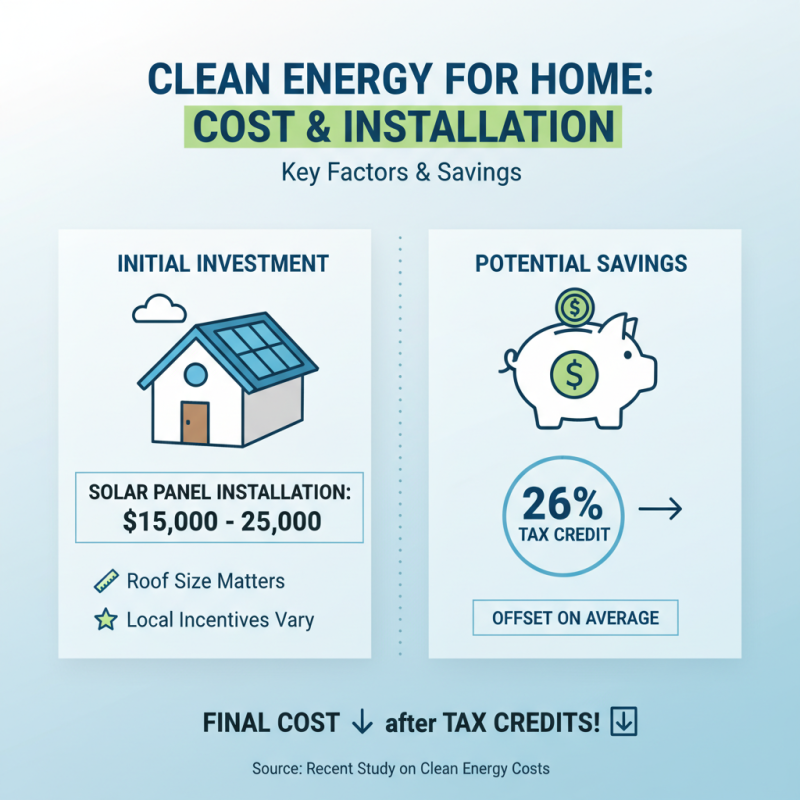
When considering clean energy for your home, cost and installation remain crucial. A recent study shows that solar panel installation can range from $15,000 to $25,000. Factors include the size of your roof and local incentives. Yet, homeowners may not realize that tax credits can offset around 26% of these costs in some regions.
Wind energy solutions also have varied installation costs. A small wind turbine might range from $30,000 to $60,000 for installation. This figure can seem daunting, but the long-term savings on utility bills can be significant. Homeowners need to evaluate local wind patterns before investing. Many find the installation process complex, with potential zoning issues.
Battery storage systems present another challenge. The average cost for a home battery setup is about $7,000 to $15,000. This expenditure may not yield immediate benefits. However, with fluctuating energy prices, the long-term payoff could justify the initial investment. While clean energy options are promising, they require thorough research and consideration of individual circumstances.
Evaluating the Environmental Impact of Each Energy Solution
When it comes to clean energy solutions, evaluating their environmental impact is crucial. Different options have unique effects on the planet. Solar energy relies on sunlight and generates no emissions during use. However, manufacturing solar panels can have ecological consequences. This warrants careful consideration when choosing this source.
Wind energy is another option often praised for its low environmental footprint. Wind turbines do not emit pollutants when generating energy. Still, their installation can disrupt local wildlife. The visual impact on landscapes is also a topic of debate. Assessing these factors helps create a more holistic view of wind power.
Geothermal energy stands out for its minimal land use and carbon emissions. It harnesses heat from the Earth, which is a sustainable resource. However, drilling can cause land degradation and release greenhouse gases. Thus, the benefits must be weighed against the potential downsides. Each clean energy source has its strengths and weaknesses. Understanding these complexities is key to making informed decisions.
Environmental Impact of Clean Energy Solutions
Researching Incentives and Subsidies for Clean Energy Adoption
When exploring clean energy solutions, researching incentives and subsidies is essential. Many governments offer programs to promote renewable energy adoption at home. These can significantly reduce your upfront costs. Tax credits and rebates are common forms of assistance. They can apply to solar panels, energy-efficient appliances, and more.
Understanding eligibility is crucial. Each program may have specific requirements. Homeowners might need to provide documentation or meet certain efficiency standards. Sometimes, incentives vary by location. Local governments may have additional resources so check with them frequently.
Navigating these programs can be overwhelming. Information might seem scattered or unclear. It’s easy to miss out on available benefits. Take time to compare various options to find what best fits your needs. This small investment of effort can yield substantial savings.