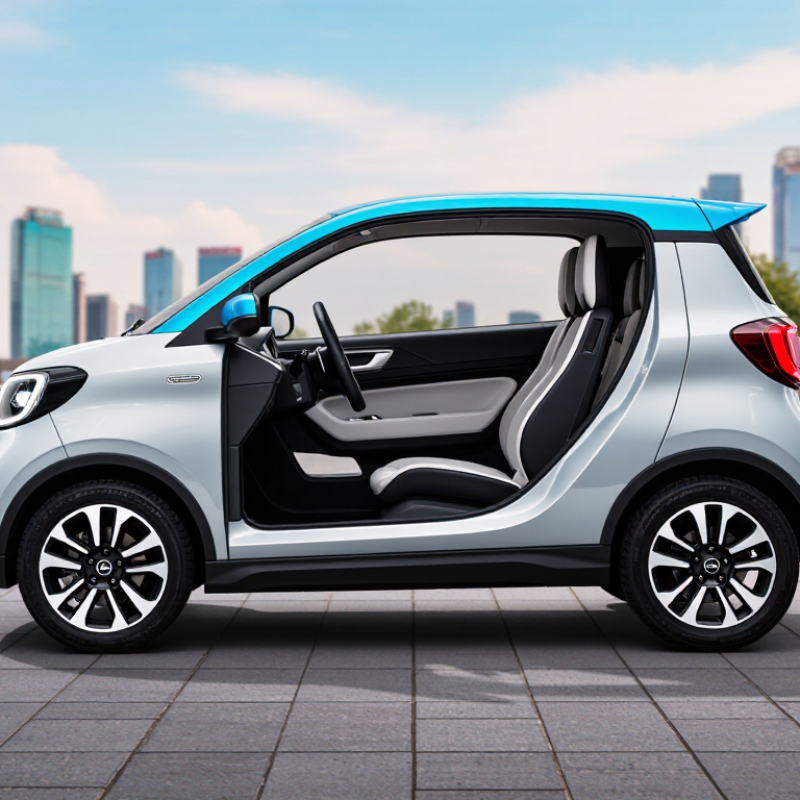
Buying an Electric Quadricycle for global markets requires more than comparing price and battery size. The vehicle must fit local regulations, road conditions, customer expectations, and service capabilities. A model approved for one country may need different equipment elsewhere. Check homologation documents, lighting requirements, charging standards, safety features, and registration procedures before placing an order.
Range is only one part of the decision. A small vehicle used in a coastal city faces different demands than one operating in a cold inland region. Battery performance, corrosion protection, cabin heating, tire availability, and warranty coverage deserve practical attention. Ask suppliers for verified test data, not attractive estimates alone. Request sample vehicles, inspect assembly quality, and test braking, visibility, seating comfort, and charging behavior. Small details matter. A loose door seal can become a serious ownership complaint.
Reliable purchasing also depends on the supplier’s experience. Review production records, export references, quality-control systems, spare-parts access, and response times. Independent inspections and clear contracts can reduce uncertainty. Local distributors should understand registration, maintenance, and customer support, rather than simply resell units. The cheapest quotation may hide expensive delays. That assumption deserves challenge. Market research can still miss cultural preferences, infrastructure gaps, or unexpected repair costs. Buyers should keep realistic budgets for compliance testing, shipping, insurance, training, and after-sales service. With careful verification, an Electric Quadricycle can become a practical urban mobility product instead of an attractive but difficult import.
Buying an electric quadricycle for global markets starts with vehicle classification. In the European Union, the L7e category covers heavy quadricycles, often with power up to 15 kW. Some configurations can reach 90 km/h. That limit is not a promise.
Check the exact L7e subclass before comparing vehicles. Passenger and cargo versions may have different requirements for mass, seating, dimensions, and safety equipment. Confirm whether the stated power means continuous output or peak output. The distinction can affect hill performance and approval documents. Battery weight also matters. A vehicle may look light in a showroom, yet exceed a local mass limit after its battery is installed.
Ask the supplier for type-approval records, test reports, braking data, and charging specifications. Review the documentation with an engineer or an experienced homologation adviser. One overlooked detail can delay registration for months. Measure the vehicle’s turning circle, ground clearance, and usable cargo area in real conditions. A narrow urban lane and a steep ramp reveal more than a polished brochure.
Global sales require separate checks outside the EU. Local authorities may classify the same vehicle differently. Insurance, driving licences, lighting, and crash requirements can change by country. I would also test cold-weather range and battery recovery after repeated fast charging. Early assumptions are tempting. They are often wrong.
Under EU vehicle-class rules, L7e heavy quadricycles can reach up to 15 kW of maximum continuous rated power and, for applicable heavy quadricycle categories, up to 90 km/h design speed. These limits help define vehicle performance when planning an electric quadricycle for global markets.
Buying an electric quadricycle for global markets starts with classification, not styling. Under UNECE rules, approval may cover braking, lighting, steering, crash protection, and electric powertrain safety. The vehicle category matters greatly. A light quadricycle and a heavy quadricycle face different limits.
In the EU, L6e and L7e classifications influence speed, mass, power, and type-approval obligations. Regulation 168/2013 also affects technical documentation and market surveillance. A vehicle approved elsewhere may still need EU testing, labeling, or software changes. Small details matter. For example, charging protection and visible lighting can delay approval if evidence is incomplete.
The United States has no single national quadricycle pathway. A low-speed vehicle may need to meet Federal Motor Vehicle Safety Standard 500, while state rules control registration, roads, and driver requirements. Importers should confirm whether the vehicle is treated as a low-speed vehicle, neighborhood vehicle, or another category. Emerging markets vary widely. Some follow UNECE principles, while others request local tests, language-specific manuals, or separate battery certifications. Check the destination authority before production. A spreadsheet is useful, but it can create false confidence. Regulations change, and local enforcement may differ from written requirements. Keep test reports, supplier records, battery data, and change histories ready for review. That discipline reduces costly surprises.
When buying an electric quadricycle for global markets, treat range as a test result, not a promise. WLTP measures energy use and driving range under controlled conditions. It does not fully represent steep roads, winter heating, heavy cargo, or repeated short trips. Numbers can mislead. A practical buyer should compare usable battery capacity, curb weight, payload, tyre pressure, and average speed. The International Energy Agency reported that global electric car sales exceeded 17 million in 2024, showing stronger demand for efficient charging infrastructure and clearer performance data (IEA, Global EV Outlook 2025).
Battery size needs context. A 15 kWh pack may offer useful urban mobility, but only if the vehicle manages temperature and auxiliary loads efficiently. Test it loaded. Record the range at 8°C, with lights and heating operating. This is not a formal certification, but it reveals weaknesses that WLTP can hide. I would also check whether the battery management system limits charging below freezing or near full capacity. That detail is often overlooked.
Charging compatibility matters across borders. IEC 61851 covers conductive charging communication and control, while IEC 62196 addresses plugs and vehicle connectors. Confirm voltage, connector type, onboard charger rating, and local grid compatibility before purchase. The IEA notes that public charging infrastructure continues expanding rapidly, yet access remains uneven between regions. A compact vehicle may accept a simple AC connection, but installation quality still affects safety and charging time. A perfect spreadsheet cannot replace a supervised charging trial.
Buying an electric quadricycle for global markets starts with battery evidence, not a showroom test. UN 38.3 confirms that lithium batteries passed transport safety tests, including vibration, shock, and external short-circuit checks. Request the test report and the latest test summary for every battery variant. A missing document can delay shipping or trigger costly retesting. The IEA Global EV Outlook 2024 reported nearly 14 million electric car sales in 2023, showing strong demand but also tougher scrutiny across supply chains.
ISO 6469 focuses on electrically powered road vehicles and covers protection against electric shock, functional safety, and rechargeable energy storage systems. It does not replace local approval. Ask for insulation resistance records, high-voltage interlock checks, and emergency disconnect procedures. EMC testing is equally important. Under UNECE Regulation No. 10, applicable vehicles must control electromagnetic emissions and withstand external interference. A quadricycle that resets near charging equipment is not market-ready. Small vehicles still create serious compliance risks.
Type approval must match the target market and vehicle category. European L6e and L7e classifications can impose different limits for speed, mass, power, lighting, braking, and occupant protection. Other regions may require separate certification, local testing, or modified equipment. The UNECE World Forum for Harmonization of Vehicle Regulations provides widely used regulatory frameworks, but national adoption differs. Review the approval scope, VIN records, software version, and production conformity evidence. Certificates can look complete while covering only one configuration. That is an uncomfortable detail, but it deserves verification.
| Compliance Area | Reference or Regulatory Framework | What It Verifies | Key Evidence to Request Before Purchase | Typical Market Relevance | Buying Decision |
|---|---|---|---|---|---|
| Battery transport safety | UN Manual of Tests and Criteria, Part III, Sub-section 38.3 | Whether a lithium battery or cell design has passed the required transport tests for conditions such as altitude simulation, temperature cycling, vibration, shock, external short circuit, impact or crush, overcharge, and forced discharge, as applicable. | UN 38.3 test summary for the exact cell or battery model; battery identification; rated energy; configuration; test-laboratory details; revision-controlled technical documentation. | International shipment of lithium cells and batteries by air, sea, road, or rail. It is a transport requirement, not a complete vehicle safety approval. | Required for shipment |
| High-voltage electrical safety | ISO 6469-3 | Protection against electric shock, insulation faults, hazardous voltage, conductive parts, electrical energy, and other hazards in electrically propelled road vehicles. | Electrical safety design dossier; insulation-resistance measurements; dielectric-strength results where applicable; protection against direct contact; service-disconnect procedure; component ratings. | Commonly used as an engineering and conformity reference for electric road vehicles. The legally applicable requirement depends on the destination market and vehicle classification. | Safety baseline |
| Rechargeable electrical energy storage system | ISO 6469-1 and applicable regional battery regulations | Safety-related design of the rechargeable electrical energy storage system, including installation, protection, monitoring, thermal-risk controls, and electrical interfaces. | Battery-system specification; battery-management-system functions; thermal management description; fuse and contactor ratings; protection strategy; abnormal-condition test reports. | Relevant to electric quadricycles using rechargeable traction batteries. Additional battery regulations may apply in the destination jurisdiction. | Verify exact version |
| Post-crash electrical safety | ISO 6469-4 | Methods and safety considerations for reducing electrical hazards after a crash, including high-voltage isolation and protection against electric shock. | Crash-test or post-crash electrical-safety reports; automatic isolation strategy; residual-voltage measurements; emergency-response information; rescue sheet. | Important for vehicles with high-voltage traction systems and for markets or approval schemes requiring post-crash electrical protection. | Market dependent |
| Electromagnetic compatibility | UNECE Regulation No. 10; ISO 11452; CISPR 25, as applicable | That the vehicle and its electronic systems do not create unacceptable electromagnetic emissions and remain sufficiently immune to electromagnetic disturbances. | EMC test plan; radiated and conducted-emission results; immunity results; antenna and test configuration; software and hardware revision; test-laboratory accreditation details. | UNECE Regulation No. 10 is commonly used for vehicle type approval in markets applying UNECE regulations. Other markets may specify different EMC methods. | Required for approval |
| Vehicle category and mass classification | Destination-market vehicle classification rules | Whether the vehicle is legally classified as a light or heavy quadricycle, low-speed vehicle, or another category based on factors such as speed, unladen mass, power, seating, and occupant protection. | Signed technical specification; maximum design speed; unladen mass; rated power; seating capacity; dimensions; axle loads; VIN structure; classification statement. | Classification differs significantly between jurisdictions and determines the applicable safety, equipment, licensing, and approval requirements. | Confirm before contract |
| European Union type approval | Regulation (EU) No 168/2013 | Framework requirements for the approval and market surveillance of two- or three-wheel vehicles and quadricycles placed on the EU market, subject to the vehicle category and applicable delegated or implementing acts. | EU type-approval certificate; information document; test reports; certificate of conformity template; production-conformity evidence; applicable category, such as L6e or L7e. | European Union market. A vehicle intended for EU registration generally requires the correct approval route or an accepted individual approval route. | Approval normally required |
| United Kingdom market approval | UK vehicle approval and registration requirements | Whether the vehicle can be legally placed on the UK market and registered under the relevant UK approval pathway after the applicable post-transition regulatory requirements. | UK approval documentation or accepted approval basis; conformity documentation; technical file; market-specific lighting, safety, EMC, and identification evidence. | United Kingdom. EU approval does not automatically guarantee UK market acceptance; the current UK route must be confirmed before import. | Confirm current route |
| United States low-speed vehicle route | FMVSS No. 500, where the vehicle qualifies as a low-speed vehicle | Federal requirements for qualifying low-speed vehicles, including specified equipment such as lamps, mirrors, parking brake, windshield, vehicle identification, and seat-belt-related provisions. | Vehicle classification analysis; FMVSS 500 compliance statement; equipment test records; VIN and certification-label details; state-specific registration review. | United States. Federal classification and state rules both matter; an electric quadricycle may not qualify as a low-speed vehicle in every configuration. | Confirm classification |
| Functional safety and control systems | ISO 26262, where applicable to the vehicle electrical and electronic systems | Risk-based development and safety processes for electrical and electronic systems, including hazard analysis, safety goals, hardware, software, validation, and production controls. | Safety plan; hazard analysis and risk assessment; safety requirements; fault-tree or FMEA records; verification and validation reports; software version control. | Often requested by professional buyers, fleet operators, and approval programs. Applicability depends on system architecture, vehicle use, and contractual requirements. | Strongly recommended |
| Production conformity | Applicable type-approval production-conformity requirements | Whether vehicles manufactured after approval continue to match the approved design, specifications, test results, and safety-critical controls. | Quality-management certificate where required; production-conformity plan; inspection records; end-of-line electrical tests; traceability for batteries, motors, controllers, and braking systems. | Essential for type-approved products and important for importers managing recalls, warranty claims, and regulatory audits. | Audit before purchase |
| Charging equipment compatibility | Applicable national charging, electrical-installation, and connector requirements | Compatibility of the onboard charger, charging inlet, cable, protection devices, voltage range, frequency, earthing arrangement, and communication functions with the intended market. | Charger specification; charging-inlet type; input-voltage and frequency range; residual-current protection information; charging test results; user and service manuals. | Market specific. A vehicle can pass transport and vehicle tests but still require charging-interface changes for a particular electrical network. | Verify per country |

Buying an electric quadricycle for global markets requires more than comparing showroom prices. Build a landed-cost sheet for each destination. Record the vehicle price, shipping, insurance, port handling, customs duty, local tax, and registration fees. Tariffs may depend on battery classification, vehicle category, and origin documents. Check current rules with customs authorities and qualified import advisers. Do not trust an old supplier quotation.
Incentives can change the calculation quickly. Some markets offer purchase rebates, reduced registration charges, or electricity credits. Others exclude small commercial vehicles or imported units. Confirm eligibility before signing a deposit agreement. Put the incentive in a separate line, not in guaranteed savings. If approval fails, your budget should still survive. It may not. Prices move.
Service and total cost of ownership deserve equal attention. Estimate scheduled inspections, tires, brake parts, battery testing, software support, insurance, charging equipment, and downtime. Ask who stocks parts locally and how long delivery takes. A low purchase price can become expensive after one delayed repair. Calculate energy cost per kilometer using local electricity rates and real test consumption. Add battery replacement risk over the planned ownership period. An early spreadsheet may ignore technician travel and winter efficiency loss. That is a serious gap. Review the model every six months, because exchange rates, tariffs, and incentives rarely remain stable.