China Top 10 Sustainable Energy Solutions for Global Buyers

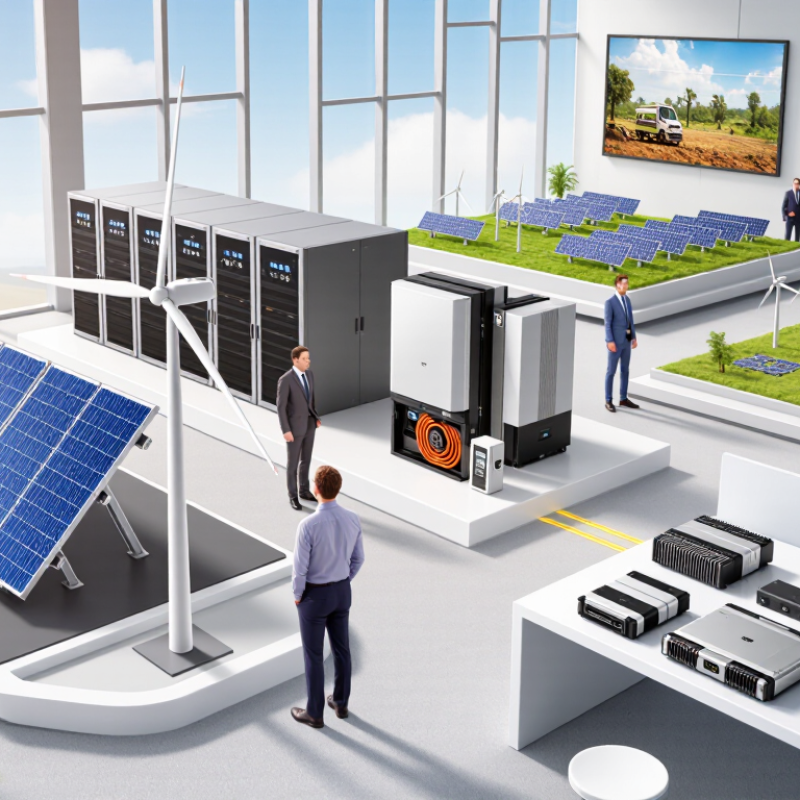
China has become a major source of sustainable energy solutions for global buyers. Its manufacturers now supply solar modules, wind turbines, battery systems, heat pumps, smart inverters, and energy management platforms. These products support projects from factory rooftops in Vietnam to remote microgrids in Africa and Europe.

Fatih Birol, Executive Director of the International Energy Agency, said, “The clean energy transition is happening worldwide and it’s unstoppable.” His observation reflects a changing procurement landscape. Buyers increasingly examine efficiency, lifecycle cost, safety records, certifications, and after-sales support. China’s broad industrial base can offer competitive pricing and integrated supply chains. That advantage matters when projects require batteries, charging equipment, software, and grid controls from compatible suppliers.

But low prices alone do not prove long-term value. Product quality can vary. Documentation may be incomplete. Recycling plans sometimes receive less attention than production capacity. Buyers should verify testing reports, warranty terms, factory experience, and local service arrangements before signing contracts. They should also assess cybersecurity and supply-chain transparency, especially for connected energy equipment.

This guide introduces ten Chinese sustainable energy solutions with practical relevance for international purchasers. It considers performance, installation conditions, maintenance demands, and compliance expectations. The selection is not perfect. Market data changes quickly, and one supplier may not fit every climate or grid. Careful evaluation remains essential. Real projects reveal the difference. A reliable inverter in a dusty warehouse, or a battery operating safely through winter, often matters more than a polished brochure.
China Top 10 Sustainable Energy Solutions for Global Buyers

Definition and Scope of Sustainable Energy Solutions from China

Sustainable energy solutions from China cover more than solar panels and wind turbines. They include renewable power equipment, battery storage, heat pumps, efficient motors, smart-grid systems, and energy-management software. The definition also includes supporting services, such as engineering, installation, maintenance, recycling, and performance monitoring.

For global buyers, sustainability should be assessed across the full product lifecycle. This means reviewing material sourcing, factory energy use, transport, operating efficiency, durability, and end-of-life handling. A low-carbon product may still create concerns if its supply chain lacks traceability or worker protections. Buyers should request test reports, carbon data, safety certifications, warranty terms, and evidence of compliance with destination-market rules. Technical experience matters here. A system designed for a dry inland site may perform poorly in a humid coastal region. This is easy to overlook.

Tips: Define the project before comparing suppliers. Check voltage, climate, grid conditions, maintenance access, and recycling options. Compare lifetime performance, not only purchase price. Ask for independent verification where possible. No solution is perfect. Good decisions remain open to review.

China’s Leading Solar Power Technologies for Global Buyers

China’s solar industry offers global buyers mature manufacturing, varied module designs, and large-scale project experience. IRENA’s Renewable Capacity Statistics 2025 reports that China added about 277 GW of solar capacity in 2024. Its cumulative capacity reached nearly 887 GW, representing a major testing ground for new technologies.

TOPCon modules now combine high efficiency with established silicon production lines. Heterojunction modules can deliver strong performance in hot climates, helped by favorable temperature coefficients. Back-contact designs reduce front-side shading and support clean rooftop layouts. The right choice depends on roof space, local heat, dust, wind, and financing costs. Laboratory efficiency alone is not enough.

Independent testing matters.

The IEA PVPS Trends 2024 report highlights continued reductions in photovoltaic costs, but it also notes pressure from oversupply and changing markets. Buyers should request IEC test reports, factory quality records, degradation warranties, and verified power measurements. They should also compare low-light performance and mechanical-load results. A useful procurement review includes module traceability, inverter compatibility, spare parts, and recycling plans. These details often receive less attention than headline wattage.

Field experience shows that installation quality can erase impressive datasheet gains. Poor connectors, uneven mounting, or weak cleaning plans create avoidable losses. No technology is perfect. Global buyers should model realistic energy yields, not optimistic projections, and use independent inspections before shipment and commissioning.

Wind, Hydropower, and Marine Energy Solutions for International Markets

China Top 10 Sustainable Energy Solutions for Global Buyers

Wind, hydropower, and marine energy are expanding across international markets. Each solution needs a different procurement strategy, site survey, and financing model.

IRENA’s Renewable Capacity Statistics 2024 recorded global wind capacity above 1,000 GW in 2023. Hydropower exceeded 1,260 GW, providing stable generation for grids and industrial users. Chinese suppliers increasingly support export projects with modular turbines, hydroelectric equipment, monitoring systems, and spare-part planning. Buyers should examine power curves, corrosion protection, warranty terms, and local grid codes before signing contracts. Small details matter.

Wind projects work well in coastal corridors and open plains. Hydropower suits regions with dependable river flow, but construction can affect communities and ecosystems. The International Energy Agency expects renewable capacity to keep growing strongly through 2028, while permitting and transmission remain serious bottlenecks. Marine energy is less mature. The IEA Ocean Energy Systems annual reporting shows continued pilot and early commercial activity, rather than mass deployment. Tidal turbines can perform in predictable currents, yet subsea maintenance remains expensive and technically demanding.

A spreadsheet cannot show every risk. Port access, seasonal waves, sediment, and technician availability may change project economics. Some early forecasts also looked too optimistic. International buyers should request independently verified testing, lifecycle emissions data, and performance records from comparable climates. Local engineering review is essential, especially where standards differ. Cost should not be the only filter.

China Top 10 Sustainable Energy Solutions for Global Buyers - Wind, Hydropower, and Marine Energy Solutions for International Markets

Rank Sustainable Energy Solution Primary Resource Typical Project Scale Indicative Capacity Factor / Efficiency Indicative Lifecycle Emissions Best-Fit International Markets Key Buyer Considerations
1 Onshore Wind Power Systems Land-based wind 1–300 MW per project 25–45% capacity factor Approximately 7–56 g CO₂e/kWh Wind-rich regions in Asia, Africa, Latin America, Europe, and North America Wind resource quality, transport access, grid connection, local permitting, and spare-parts availability
2 Fixed-Bottom Offshore Wind Offshore wind 100–1,500+ MW per project 40–60% capacity factor Approximately 8–35 g CO₂e/kWh Coastal markets with strong offshore wind resources and mature maritime infrastructure Water depth, seabed conditions, port capability, subsea cabling, marine surveys, and installation vessels
3 Floating Offshore Wind Deep-water offshore wind 50–1,000+ MW per project 40–60% capacity factor Approximately 15–50 g CO₂e/kWh; project-specific Countries with deep coastal waters, limited shallow seabed, and large offshore development zones Floating-platform design, mooring systems, dynamic cables, port assembly, towing distance, and technology maturity
4 Run-of-River Hydropower Natural river flow 1–300 MW per project 30–60% capacity factor Approximately 1–48 g CO₂e/kWh; site-dependent Mountainous and river-rich regions with reliable year-round water flows Seasonal hydrology, ecological flow requirements, sediment management, civil works, and community consultation
5 Reservoir Hydropower Stored river water 50–5,000+ MW per project 30–60% capacity factor Approximately 1–48 g CO₂e/kWh; reservoir-climate dependent Markets requiring firm renewable electricity, grid flexibility, and seasonal energy storage Land use, resettlement, biodiversity, dam safety, sedimentation, drought exposure, and long-term water availability
6 Pumped-Storage Hydropower Water storage and elevation difference 100–3,000+ MW per project 70–85% round-trip efficiency Project-specific; mainly dependent on construction and electricity input mix Power systems with high solar and wind penetration and a need for long-duration storage Reservoir geography, water availability, cycling requirements, transmission access, and market rules for storage services
7 Tidal-Stream Energy Systems Fast-moving tidal currents 1–100 MW per project 25–40% capacity factor Generally low; often estimated below 50 g CO₂e/kWh, subject to project data Coastal channels and straits with strong, predictable tidal currents Current velocity, marine-storm conditions, subsea installation, biofouling, navigation safety, and environmental monitoring
8 Tidal-Range Energy Tidal rise and fall 100–5,000+ MW per project 20–35% capacity factor Approximately 15–50 g CO₂e/kWh; highly site-dependent Coastal areas with large tidal ranges and suitable estuaries, bays, or lagoons Very high civil-engineering cost, coastal ecosystem effects, sediment transport, fisheries, shipping, and permitting
9 Wave Energy Converters Ocean waves 1–100 MW per project 25–40% capacity factor; technology-dependent Generally low; commercial project data remains limited Exposed coastlines and islands with consistent wave energy and limited land resources Survivability in extreme seas, corrosion, subsea cables, maintenance access, power smoothing, and early-stage technology risk
10 Ocean Thermal Energy Conversion Ocean temperature difference 1–100 MW per project Potentially 80–90% availability; low conversion efficiency Project-specific; generally low during operation Tropical islands and coastal regions with a persistent surface-to-deep-water temperature gradient Large seawater pipes, offshore engineering, corrosion control, deep-water access, intake impacts, and limited commercial deployment
Data note: Values are indicative international-market ranges compiled from commonly reported ranges in lifecycle-assessment literature and renewable-energy industry studies. Actual performance, emissions, cost, and project scale vary according to resource quality, design, location, construction method, grid conditions, financing, and local regulations.

Energy Storage, Smart Grids, and Energy Efficiency Technologies

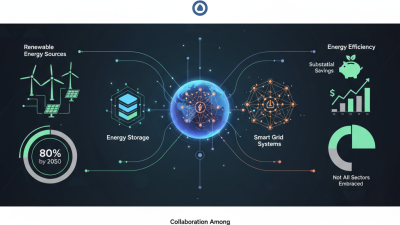
Global buyers are prioritizing energy storage, smart grids, and efficiency technologies as electricity demand becomes less predictable. The International Energy Agency reported that grid-scale battery additions increased by almost 130% in 2023. Around 42 GW of new capacity was installed worldwide. For buyers, this means evaluating response time, cycle life, thermal safety, and degradation data. A low purchase price may become expensive when replacement cells arrive earlier than expected.

Smart grids connect distributed generation, flexible loads, meters, and storage through real-time control. The IEA estimates that annual grid investment must rise above 600 billion dollars by 2030, roughly double today’s level. Interoperability matters. So does cybersecurity. Buyers should request open communication protocols, clear data ownership, and independent performance testing. A technically advanced system can still fail if local operators cannot maintain it.

Efficiency remains the quietest energy resource. The IEA’s Energy Efficiency 2023 report recorded global progress of about 2.2% in 2022, yet faster improvement is needed to meet climate targets. High-efficiency motors, smart building controls, heat recovery, and demand-response systems can reduce peak consumption before new generation is built. Still, projected savings are not guaranteed. Weather, user behavior, maintenance quality, and weak baseline data can distort results. Procurement teams should require measured verification, lifecycle cost analysis, and regional service capacity. Perfect forecasts do not exist.

Selection Criteria for Global Buyers: Cost, Quality, and Sustainability

China Top 10 Sustainable Energy Solutions for Global Buyers

Selection Criteria for Global Buyers: Cost, Quality, and Sustainability

For global buyers comparing China’s top sustainable energy solutions, cost means more than the invoice. A five-year total cost model should include installation, shipping, duties, training, spare parts, and disposal. Energy output matters too. A cheaper system may produce less power during cloudy seasons. Local labor rates can also change the final calculation.

Quality requires evidence, not attractive brochures. Buyers should review test reports, warranty terms, production records, and grid compatibility. Factory audits and independent inspections can reveal weak wiring, inconsistent components, or poor packaging. Paperwork is not performance. Requesting a sample unit and testing it under local heat, humidity, or dust provides stronger evidence. Maintenance response times deserve careful attention.

Sustainability should cover the full product lifecycle. Examine energy efficiency, material sourcing, carbon data, repairability, and end-of-life recycling. Ask suppliers to explain their calculation methods and provide measurable records. Vague environmental claims should not influence a purchasing decision. Some solutions may use cleaner materials but require expensive replacement parts. Others may offer excellent durability but carry higher transport emissions. There is no perfect scorecard. Buyers should record these trade-offs, revisit assumptions, and select the solution that remains reliable after real operating conditions are considered.

China's Top 10 Sustainable Energy Solutions for Global Buyers

Selection criteria: cost, quality, and sustainability. Lower LCOE and lifecycle emissions are preferable, while a higher capacity factor indicates stronger operational availability.

Representative global technology benchmarks commonly used for China-based renewable energy procurement. Values are rounded estimates based on IRENA renewable power cost data, Lazard LCOE benchmarks, and IPCC lifecycle emissions assessments; they are not company or brand data.