Choosing energy storage solutions for a business is not simply a matter of buying the largest battery. It requires a clear understanding of daily electricity use, demand charges, outage risks, operating temperatures, and future expansion plans. A cold-storage warehouse may need steady power for compressors, while a factory may need rapid discharge during production peaks. The details matter.
U.S. energy expert Jennifer Granholm has said, “Energy storage is a critical component of the clean energy transition.” Her statement reflects a practical reality: storage connects renewable generation with dependable business operations. Solar panels may produce strongly at noon, but a company could need the most electricity at 6 p.m. A correctly sized system can shift that energy, reduce grid dependence, and provide backup power when interruptions occur.
Yet no solution is perfect. A first assessment may overlook battery degradation, limited installation space, fire-safety requirements, or software compatibility. That is why businesses should compare usable capacity, round-trip efficiency, warranty terms, maintenance support, and total ownership costs. Look beyond the purchase price. A cheaper system may create higher replacement or downtime costs later.
This guide explains how to evaluate energy storage solutions with practical business priorities in mind. It considers lithium-ion batteries, flow batteries, thermal storage, and hybrid systems. It also examines return on investment, resilience, emissions goals, and site-specific constraints. The right choice should fit the facility, not merely follow market trends. Small mistakes can become expensive. Careful questioning remains essential.
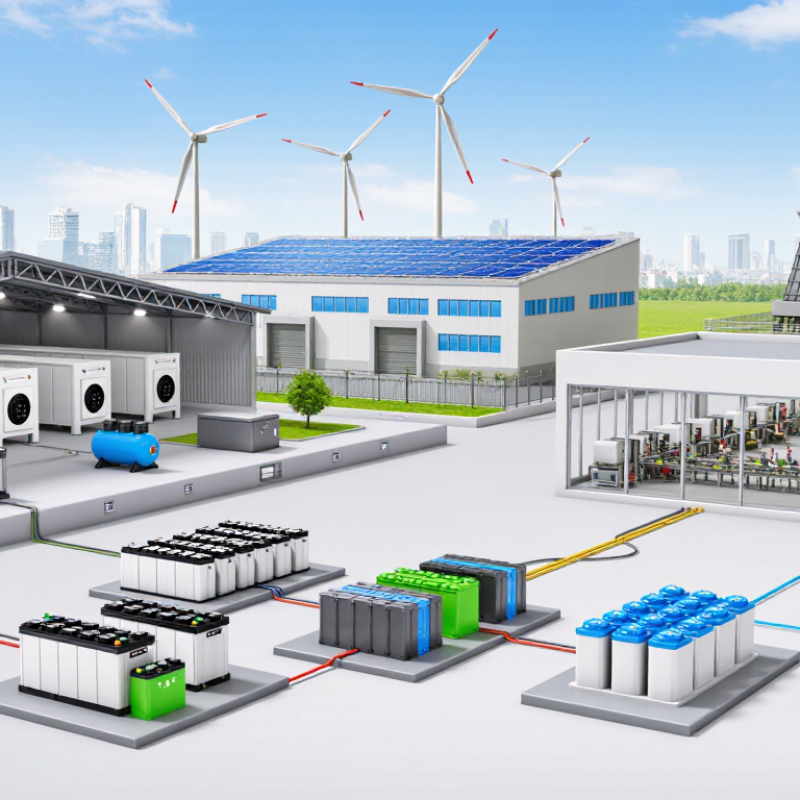
Define your business’s energy storage needs before comparing technologies or prices. Map hourly electricity use for at least twelve months, including seasonal peaks, shutdowns, and unusual production days. Identify demand charges, outage costs, critical equipment, and acceptable recovery time. A cold-storage facility may need four hours of backup, while a workshop may need brief power support and peak shaving.
The objective must be measurable: reduce demand charges by 15%, maintain refrigeration for three hours, or increase renewable-energy use to 70%.
Industry data shows why careful planning matters. The International Energy Agency’s Batteries and Secure Energy Transitions report states that global battery-storage additions reached about 42 GW in 2023, more than doubling from the previous year. The U.S. Department of Energy’s Pathways to Commercial Liftoff: Long Duration Energy Storage estimates that the United States may need 60–100 GW of long-duration storage by 2030.
These figures signal rapid growth, not automatic suitability. Your site still needs a specific load profile.
Check usable capacity, power output, round-trip efficiency, cycle frequency, degradation, fire protection, and interconnection limits. Ask how performance changes after five or ten years. Include software, maintenance, replacement, and disposal costs in the model.
A neat spreadsheet can still be wrong. Weather, production changes, and optimistic battery-life assumptions often distort returns. I would test the proposal against a difficult month, a long outage, and a lower-than-expected electricity-price difference.
Choosing storage begins with the business problem, not the battery chemistry. Lithium-ion systems deliver fast response, high efficiency, and compact installation. They suit peak shaving, backup power, and frequent daily cycling. However, capacity can decline with heat, heavy use, and poor charging control. A shaded, ventilated equipment room matters.
Flow batteries offer longer discharge periods and usually tolerate deep cycling well. Their separate power and energy components support flexible scaling. They need more space, pumps, and careful maintenance.
Lead-acid systems remain familiar and affordable for limited backup duties. Their shorter cycle life makes them less suitable for daily load shifting.
Thermal storage can reduce cooling demand by storing energy as chilled water or ice. It works best when building loads follow predictable schedules.
Look beyond advertised capacity. Compare usable energy, round-trip efficiency, response time, warranty limits, fire protection, and service access.
A site audit should examine interval electricity data, roof conditions, local temperatures, and critical loads. For example, a factory may need two hours of support, while a clinic needs immediate transfer and reliable reserve capacity.
No technology wins every test. Some projections also underestimate maintenance effort. Recheck savings under cloudy weather, production changes, and future electricity tariffs. Independent testing and qualified electrical engineers can reveal gaps before procurement.
Choosing an energy storage solution starts with matching capacity to your operating pattern. Nameplate capacity is not the same as usable capacity. Leave room for reserve power, temperature changes, and battery degradation. Review hourly load data, not just monthly electricity bills. A cold warehouse may need steady output overnight, while a workshop may require short, intense power bursts.
Performance should be measured under real conditions. Compare round-trip efficiency, response time, continuous output, and operating temperature range. Ask for test results at partial loads and during repeated cycling. A system that performs well in a laboratory may respond differently beside a dusty production line. Real conditions matter. Check monitoring functions carefully. Clear alerts can help staff identify abnormal heat, voltage changes, or declining efficiency before failures become expensive.
Safety deserves practical attention. Look for thermal management, cell-level monitoring, fault isolation, emergency shutdowns, and suitable installation clearances. Confirm that qualified technicians can inspect the equipment and maintain its protection systems. Lifespan depends on cycle depth, charging habits, ambient temperature, and calendar aging. A high cycle rating may sound impressive, but it can be misleading without operating conditions. I would not rely on a single warranty figure. Compare degradation assumptions, maintenance access, replacement procedures, and end-of-life handling. Some plans look efficient on paper, yet become difficult during a power outage.
| Technology Type | Typical Commercial System Capacity | Typical Discharge Duration | Round-Trip Efficiency | Response Time | Cycle Life | Safety Characteristics | Best-Fit Business Applications |
|---|---|---|---|---|---|---|---|
| Lithium Iron Phosphate (LFP) | 100 kWh to 100+ MWh; modular expansion is common | 1–4 hours, with longer-duration configurations available | Approximately 88–95% | Milliseconds to seconds | Approximately 4,000–8,000 cycles at moderate depth of discharge | Generally lower thermal-runaway risk than nickel-rich lithium-ion chemistries, but requires battery management, thermal monitoring, ventilation, and fire-protection controls | Peak shaving, backup power, solar self-consumption, demand-charge reduction, and frequency regulation |
| Lithium Nickel Manganese Cobalt Oxide (NMC) | 100 kWh to 100+ MWh; usually supplied in modular systems | 1–4 hours | Approximately 90–95% | Milliseconds to seconds | Approximately 2,000–5,000 cycles, depending on operating conditions | High energy density, but greater thermal-management and fire-mitigation requirements than LFP; installation should follow applicable codes and testing requirements | Space-constrained sites, fast-response services, backup power, and applications prioritizing compact size |
| Vanadium Redox Flow Battery | 100 kWh to multi-MWh systems; energy capacity can be increased by enlarging electrolyte tanks | 4–12+ hours | Approximately 65–85% | Seconds | Approximately 10,000–20,000 cycles; electrolyte can often operate for many years with appropriate maintenance | Low fire risk because the electrolyte is generally aqueous and non-flammable; pumps, tanks, and containment systems still require inspection | Long-duration renewable integration, energy shifting, microgrids, and frequent deep cycling |
| Lead-Acid | 10 kWh to several MWh | 1–4 hours | Approximately 70–85% | Milliseconds to seconds | Approximately 500–1,500 cycles, strongly affected by depth of discharge and temperature | Mature technology, but may involve hydrogen release, corrosive electrolyte, ventilation requirements, and heavier equipment | Low-cost standby power, telecommunications backup, and applications with infrequent discharge |
| Sodium-Ion | Typically tens of kWh to multi-MWh; commercial availability varies by market | 1–4 hours | Approximately 85–92% | Milliseconds to seconds | Approximately 3,000–6,000 cycles, depending on cell design and operating conditions | Generally good low-temperature performance and reduced reliance on certain critical minerals; system-level thermal and electrical protections remain necessary | Stationary storage where cost, supply-chain diversification, and temperature tolerance are important |
Choosing energy storage begins with the installation site, not the battery cabinet. Measure the facility’s load profile, peak demand, available floor space, fire access, ventilation, and electrical interconnection limits. A warehouse may need outdoor equipment and new transformers. An office may need quieter, smaller systems. The IEA’s Batteries and Secure Energy Transitions report states that global battery storage capacity must expand sixfold by 2030 in its net-zero pathway. Demand is accelerating.
Costs require more than a quoted equipment price. Include engineering, permits, construction, software, insurance, maintenance, replacement reserves, and grid studies. BloombergNEF reported that average battery pack prices fell 20% in 2024, reaching $115 per kilowatt-hour. Prices still vary by project. Lazard’s 2024 Levelized Cost of Storage analysis placed four-hour storage costs across a broad range, roughly $110 to $228 per megawatt-hour, before site-specific incentives. That range matters.
Model several revenue streams. Demand-charge reduction, time-of-use shifting, backup power, and grid services may support returns, but they should not be counted twice. In the United States, eligible projects may receive a standalone investment tax credit under current federal guidance, while local programs differ. Verify eligibility with a qualified tax adviser. I would test low-price spreads, higher degradation, delayed commissioning, and weaker availability. A spreadsheet can look precise and still be wrong. Leave room for the uncomfortable case.
A scalable energy storage system should fit today’s load and tomorrow’s expansion. Start with a detailed load profile, not a sales estimate. Review hourly demand, peak charges, outage risks, and available space. A warehouse may need power for refrigeration, lighting, and automation at different times. Choose modular capacity so additional units can be added without redesigning the entire site. Check round-trip efficiency, usable capacity, response time, and expected cycle life. These figures should come from verified test data and clear operating conditions. A cheaper system can become expensive if performance falls during heat or frequent cycling.
Tips: Build a five-year capacity model using conservative growth assumptions. Leave space for maintenance access and future electrical upgrades. Ask an independent engineer to review protection settings, safety controls, and grid connection plans. Keep all technical documents organized.
Long-term management needs more than remote monitoring. Set monthly checks for state of health, temperature trends, alarms, and energy throughput. Train staff to recognize unusual noise, heat, or sudden performance changes. Keep service records, inspection dates, and replacement forecasts in one controlled system. Review the storage strategy after major changes, such as new machinery or altered operating hours. Contracts should define response times, spare-part responsibilities, software access, and end-of-life handling. Do not assume the original design will remain perfect. Small forecasting errors can affect payback calculations. Revisit assumptions annually, and adjust operating rules when real data disagrees. Reliable performance comes from disciplined review, not capacity alone.