How to Choose the Right Electric Forklift Battery for Your Needs?
Choosing the right Electric Forklift Battery can significantly influence warehouse efficiency. Expert Stephen Roe, a leading consultant in battery technologies, asserts, "Selecting the right battery is critical to optimizing performance." Understanding your specific needs is crucial. Not all electric forklift batteries are created equal, and different types offer unique advantages and limitations.
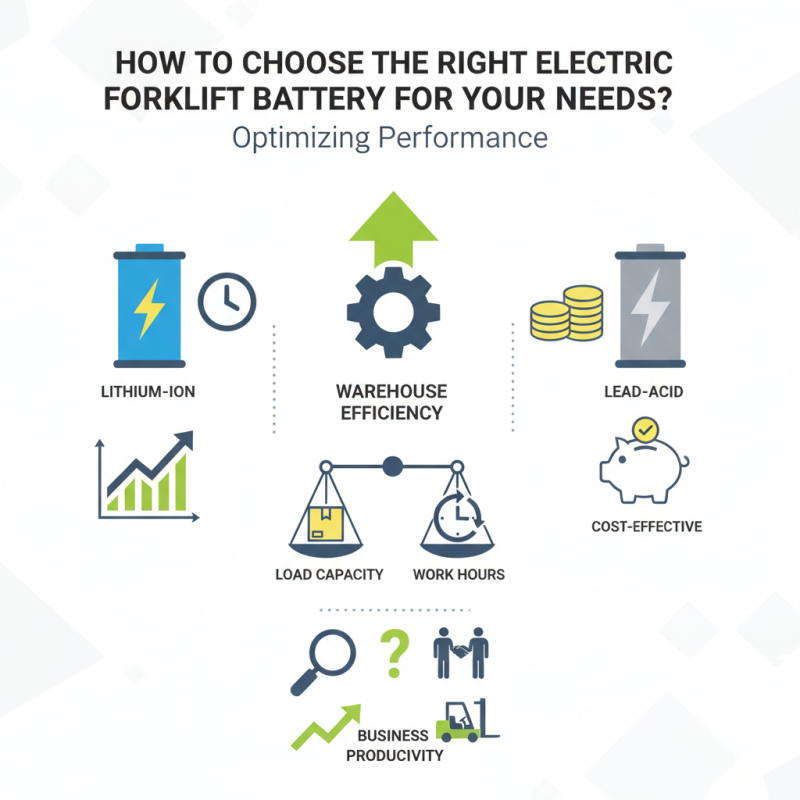
While lithium-ion batteries provide fast charging and longer life, lead-acid options are more traditional and cost-effective for many operations. Each choice comes with trade-offs. This decision impacts everything from daily operations to long-term costs. Warehouse managers must consider factors like load capacity and work hours to make informed choices.
A misstep in battery selection can lead to inefficiency. Warehouses may face downtime or increased operational costs if the wrong battery is chosen. Therefore, thorough research and expert advice are vital in this selection process. The stakes are high, and the right Electric Forklift Battery can propel a business's productivity forward.
Understanding Electric Forklift Battery Types and Technologies
When selecting the right electric forklift battery, understanding battery types is essential. There are commonly two main types: lead-acid and lithium-ion. Lead-acid batteries are popular due to their reliability and cost-effectiveness. They typically last between 1,500 to 2,500 cycles. However, they require regular maintenance and have longer charging times. Lithium-ion batteries, though initially more expensive, shine in efficiency. They charge faster and offer 2,500 to 5,000 cycles. This translates to lower lifetime costs.
The charging infrastructure also varies significantly. Lead-acid batteries need routine checks and water refills, which can consume valuable time. In contrast, lithium-ion systems often require minimal maintenance and can be charged during breaks, optimizing workflow. A report by the Industrial Battery Association indicates that lithium-ion technology is rapidly gaining traction, with usage projections set to rise by over 30% in five years.
Tip: For facilities with heavy usage patterns, consider lithium-ion batteries for their quicker turnaround times. They can enhance productivity significantly.
Another aspect is battery management systems (BMS). A robust BMS ensures optimal performance, extending battery life. Properly monitoring battery health can prevent unexpected downtimes. Some facilities report a 20% increase in operational efficiency after implementing regular battery health checks.
Tip: Always assess your facility’s specific needs before making a choice. Factors like operating hours and lifting capacities can guide your decision.
Evaluating Your Forklift Application and Power Requirements
Choosing the right electric forklift battery begins with a thorough evaluation of your specific application and power needs. Consider the typical tasks your forklift will perform. Is it handling heavy loads over long distances? Or is it used for lighter tasks in a smaller area? Each scenario demands a different battery capacity and performance level.
Tips: Assess the average run time required for your operations. A battery that lasts longer between charges can improve efficiency. However, consider the trade-off between initial costs and operational savings. A higher-capacity battery may reduce downtime but could also be pricier.
Evaluate the charging options available in your facility. Different batteries have distinct charging requirements, which can affect your workflow. For example, some may need longer charging times. You want a battery that fits seamlessly into your daily operations. Think about your space and equipment. Does your current setup support fast charging options?
It's crucial to understand the limitations of each battery type. For instance, some may not perform well in extreme temperatures. An effective choice should address these challenges. Ensure you have a backup plan for peak operational times. Reliability in battery performance is essential to maintaining productivity in your operations.
How to Choose the Right Electric Forklift Battery for Your Needs?
| Battery Type | Capacity (Ah) | Voltage (V) | Typical Use | Charging Time (hours) |
| Lead-Acid | 200 | 24 | General Warehouse | 8-10 |
| Lithium-Ion | 150 | 36 | High-Intensity Operation | 2-3 |
| Gel | 180 | 24 | Indoor Use | 8-12 |
| AGM | 200 | 12 | Frequent Lifting | 6-8 |
Assessing Battery Capacity, Lifespan, and Maintenance Needs
When choosing an electric forklift battery, understanding capacity, lifespan, and maintenance is crucial. Battery capacity, measured in amp-hours (Ah), directly impacts performance. For instance, a forklift requiring 500 Ah can run for up to 8 hours under moderate use. However, selecting a battery with insufficient capacity could lead to frequent recharges, impacting productivity.
Lifespan is another vital factor. Most lead-acid batteries last 1,500 to 2,000 cycles, while lithium-ion batteries can exceed 5,000 cycles. This difference means that investing in a lithium-ion battery might lead to lower long-term costs despite higher initial expenses. Regular maintenance is essential to maximize battery life. Routine checks for water levels in lead-acid batteries are necessary. Neglect can reduce lifespan by up to 30%.
Tips: Always keep batteries clean. Dust and debris can cause overheating. Additionally, consider your operational environment. Extreme temperatures can affect performance. Invest in heat management solutions if needed. Regular training for operators on proper battery handling also pays off. Educated users drastically reduce the risk of mistakes.
Comparing Cost-effectiveness of Various Battery Options
When selecting an electric forklift battery, cost-effectiveness is a crucial factor. Different battery options have varying price points and lifespans. Lead-acid batteries typically cost less upfront. However, their shorter cycle life can lead to higher operational costs over time. Lithium-ion batteries, while pricier initially, often require less maintenance. They also offer longer lifespan and energy efficiency.
Tips for choosing the right battery:
- Calculate your operational needs. Consider how long the forklift will be used daily.
- Evaluate your charging infrastructure. Some batteries charge faster than others.
- Think about space. Larger batteries may require more room for ventilation and installation.
It's essential to weigh the initial cost against the long-term benefits. A less expensive battery may not always be the best choice. The hidden costs of more frequent replacements can add up quickly. Analyze your specific use case and project future expenses. Balancing purchase price with longevity will lead to better financial decisions in the long run.
Choosing the Right Charging Solutions and Infrastructure
When it comes to selecting the right charging solutions for electric forklift batteries, understanding the specific needs of your operation is crucial. Every warehouse has different requirements. For instance, the frequency of use and the duration of operation can greatly impact the type of charging infrastructure you need. A busy warehouse may benefit from fast charging options. This allows for shorter downtime and greater efficiency. However, this can lead to higher costs if not managed properly.
Choosing the right charging station matters too. Consider the available space and power supply. Not all charging units will fit in every setting. It's important to ensure that the infrastructure is compatible. You might find that some units take longer to charge than expected. This could require additional planning for forklift usage and scheduling. Additionally, investing in smart charging solutions can help optimize energy consumption, but these technologies may require expertise to implement effectively.
Assessing your existing power systems is another critical factor. Updating your electrical infrastructure could be necessary. This may entail costs and logistical challenges. Making informed choices can steer you toward a more sustainable solution. Think about the long-term implications of your decisions as well. Solutions that work today might not be suitable in the future. Prioritizing flexibility in your charging options allows for growth and change in operations.