10 Essential Tips for Navigating the Energy Transition
Navigating the energy transition is a complex journey. As we shift from traditional fossil fuels to renewable sources, challenges arise. Experts like Dr. Sarah Thompson, a leading authority in sustainable energy, emphasize the importance of adaptability. "Embracing change in energy systems is critical for our future," she notes.
The energy transition involves more than just technology. It includes policy shifts, economic adjustments, and social acceptance. Many industries are grappling with these changes. Companies often underestimate the time needed to implement new systems. Moreover, communication between stakeholders can falter. Misunderstandings may derail progress, highlighting the need for collaboration.
As we explore ten essential tips for navigating this transition, it is vital to reflect on our current practices. Mistakes will happen, but learning from them can guide us. Each step taken is a building block toward a sustainable future. The path may be fraught with uncertainty, but it is essential for a greener planet.
Understanding the Energy Transition: Key Definitions and Concepts
The energy transition involves shifting from fossil fuels to renewable energy sources. This change is crucial for reducing greenhouse gas emissions. Understanding key concepts can help anyone navigate this transformation.
One essential tip is to familiarize yourself with terms like "renewable energy," "energy efficiency," and "carbon footprint." These concepts are at the heart of the transition. They guide decisions on energy consumption and protection of the environment. You should also learn about the potential of solar, wind, and hydroelectric power. Their roles will only grow in the coming years.
Another tip focuses on personal action. Reducing energy consumption can be empowering. Simple steps, like using energy-efficient appliances or driving less, make a difference. Remember, every little bit counts. Reflect on how your choices impact the environment. The transition is complex, but individuals can play a part. Making informed decisions is key in adapting to this evolving energy landscape.
Energy Transition: Key Energy Sources Usage in 2023
The Role of Renewable Energy Sources in the Transition
The energy transition is crucial for a sustainable future. Renewable energy sources play a major role in this shift. According to the International Energy Agency (IEA), renewables are expected to account for nearly 95% of the increase in global power capacity by 2026. The shift is essential, but it poses challenges.
Wind and solar energy are expanding rapidly. They accounted for 88% of the total renewable energy increase in recent years. However, these sources still rely on significant infrastructure and investment. Grid integration remains a challenge. The energy market must adapt to these new dynamics. Emerging technologies, like battery storage, are essential but not yet fully developed.
Despite the promise of renewables, there is room for improvement. Current energy policies often lack coherence and support. Many regions face resistance to new installations. Public acceptance is vital for success. Finding a balance between energy needs and environmental impact demands innovation. Discussions must evolve past traditional paradigms. The future depends on a collective effort to rethink energy production and consumption.
Transitioning from Fossil Fuels: Strategies and Challenges
Transitioning from fossil fuels is a complex journey. Many industries face challenges in shifting to renewable energy sources. This includes technological barriers, supply chain issues, and workforce adaptation. Companies need to rethink their energy strategies carefully. It’s not just about replacing one energy source with another. It requires a deeper commitment to sustainability.
One of the most pressing challenges is the initial cost of the transition. Investments in renewable technologies can be substantial. Many organizations hesitate to take the leap. Education and awareness are crucial in addressing this. People often overlook the long-term benefits of cleaner energy. Additionally, regulatory frameworks must evolve to support this shift. Current policies may hinder progress rather than foster it.
Openness to innovation is essential. New solutions may come from unexpected sources or collaboration. It’s important to embrace failure as part of the process. Not every renewable project succeeds. Reflection on these setbacks can lead to better strategies. Ultimately, the energy transition is not just about technology; it’s also about mindset and cultural change.
Technological Innovations Driving the Energy Transition Forward
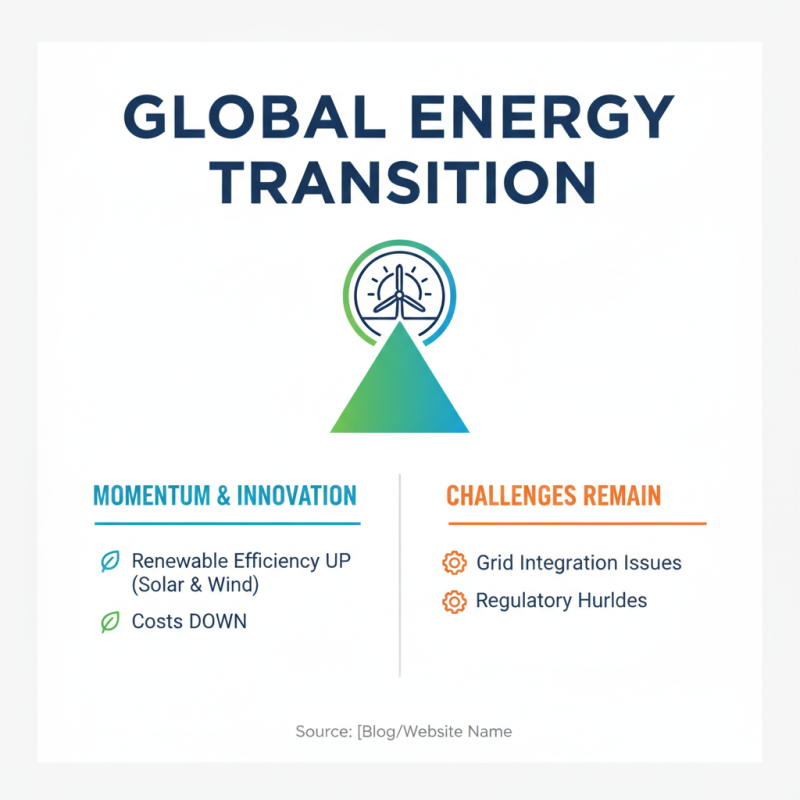
The energy transition is gaining momentum, driven by technological innovations. Renewable energy sources, like solar and wind, are improving efficiency. These advancements reduce costs. Yet, challenges remain. Some regions struggle with grid integration. Others face regulatory hurdles that slow progress.
Energy storage technologies are crucial for stability. Batteries, for example, store excess power generated during peak production times. However, the environmental impact of battery production raises concerns. Finding a balance is not easy. Developers must consider sustainability in their innovations.
Smart grids are another key advancement. They optimize energy distribution and consumption. While these systems hold promise, implementation can be complex. Many areas lack the infrastructure to support smart technology. It's a reminder that technology alone won't solve all issues in the energy transition. Continuous adaptation and thoughtful strategies are essential for future success.
Engaging Stakeholders and Communities in the Transition Process
Engaging stakeholders and communities is critical in the energy transition process. Many reports indicate that fostering local involvement boosts project success. A survey from the International Renewable Energy Agency (IRENA) states that community engagement increases acceptance rates by 40%. When local voices are heard, projects are more likely to meet actual needs.
Yet, challenges abound. Many initiatives fail to consider the unique landscapes of communities. For example, the Global Wind Energy Council identifies that merely informing stakeholders is not enough. Active participation is essential. In many cases, communities feel sidelined, especially in rural areas where their input could dramatically shape energy plans.
Involving local populations in decision-making builds trust. It fosters a sense of ownership. A report by the World Resources Institute highlights that 60% of successful energy projects involved strong local advocacy. However, transparency remains a hurdle. Communities often report feeling misled about the benefits. Addressing these concerns requires ongoing dialogue and genuine efforts to change. This journey is not perfect, but the potential rewards are significant.