How to Pursue a Career in Renewable Energy Engineering?
Renewable energy engineering is a vital field for our future. As the planet faces climate change, the demand for sustainable solutions grows. The shift to clean energy sources is essential, creating numerous opportunities in this sector. Pursuing a career in renewable energy engineering is both exciting and challenging.
Many aspiring engineers may not fully understand what this path entails. It requires a blend of skills, including a strong foundation in math and science. Practical experience is equally important. Internships or volunteer programs provide hands-on learning experiences. Some might worry about job stability in this evolving industry. However, the increasing focus on renewables ensures a steady demand for skilled professionals.
Exploring this field often reveals unexpected challenges. Staying updated with new technologies and policies can be overwhelming. Networking with industry professionals might feel daunting at first. Yet, these connections can lead to valuable opportunities. Ultimately, a career in renewable energy engineering offers a chance to make a meaningful impact on the world.

Understanding Renewable Energy Engineering: An Overview
Renewable energy engineering focuses on sustainable energy sources.
Solar, wind, and
hydroelectric systems play crucial roles. These engineers design,
develop, and implement technologies to harness energy effectively. The field is constantly evolving, presenting
new challenges and opportunities.
Many aspiring engineers find themselves struggling with the vast amount of information. They often feel
overwhelmed by the technical skills required. Familiarity with physics and mathematics
is vital. However, it’s also important to develop soft skills like teamwork
and problem-solving. The balance between hard and soft skills can be tricky
to navigate.
Internships are essential for gaining practical experience. They provide real-world insights into the industry.
Networking with professionals offers a glimpse into
potential career paths. However, this can be daunting for newcomers. Many feel hesitant to reach out. Building
confidence takes time and effort. Embracing imperfections in learning can lead to growth in this dynamic field.
Educational Pathways: Degrees and Certifications in Renewable Energy
The demand for renewable energy engineers continues to soar. According to a report by the International Renewable Energy Agency (IRENA), global renewable energy jobs reached 12 million in 2020. This number is expected to grow as more countries shift towards sustainable practices. Pursuing a career in this field can be rewarding. However, it requires a solid educational foundation.
Degrees in renewable energy engineering are essential. A bachelor's degree in engineering or environmental science is a good starting point. Many universities now offer specialized programs focused on renewables. Certifications are also vital. They demonstrate your skills and commitment. Programs by organizations like the North American Board of Certified Energy Practitioners can enhance your resume.
While many students feel prepared, some find the workload intense. The technical aspects can be challenging. Understanding complex energy systems is not easy. Real-world applications often differ from classroom theory. Internships can help bridge this gap. Engaging with professionals offers valuable insights. Networking is key in this ever-evolving field.
How to Pursue a Career in Renewable Energy Engineering? - Educational Pathways: Degrees and Certifications in Renewable Energy
| Educational Pathway |
Degree/Certification |
Typical Duration |
Key Subjects |
Career Opportunities |
| Bachelor's Degree |
BSc in Renewable Energy Engineering |
4 years |
Thermodynamics, Solar Energy Systems, Wind Energy |
Energy Consultant, Wind Farm Manager |
| Master's Degree |
MSc in Sustainable Energy |
1-2 years |
Sustainable Energy Policy, Energy Economics |
Policy Analyst, Energy Researcher |
| Certification Program |
Certified Renewable Energy Professional (CREP) |
6 months - 1 year |
Renewable Energy Technologies, Project Management |
Renewable Energy Project Manager |
| PhD Program |
PhD in Renewable Energy Engineering |
3-5 years |
Advanced Energy Storage, Smart Grids |
Research Scientist, University Lecturer |
Essential Skills and Competencies for Renewable Energy Engineers
Renewable energy engineering is a growing field that requires specific skills and competencies. In a recent report by the International Renewable Energy Agency (IRENA), the renewable energy sector is projected to employ over 24 million people by 2030. This highlights the importance of skilled engineers in this transition.
To succeed, aspiring renewable energy engineers should focus on certain core competencies. Technical skills in software like MATLAB and AutoCAD are essential. Knowledge of various renewable technologies, such as solar and wind, is crucial. Additionally, engineers must develop strong analytical skills for system design and problem-solving. Familiarity with sustainability principles is also a plus.
Tips: Gain hands-on experience through internships. Stay updated on industry trends by attending workshops. Consider acquiring certifications in renewable technologies to enhance your credibility.
Networking is another key aspect. Connect with professionals in the field. Join forums and attend events to learn from experts. Remember, the journey may not always be smooth; challenges are opportunities for growth. Embrace them.
Finding Job Opportunities: Networking and Industry Resources
Networking is essential in renewable energy engineering. Attend industry events, seminars, and workshops. These gatherings allow you to meet professionals in the field. Connecting with others opens doors to job opportunities that might not be advertised. Engage in conversations and ask questions. Many relationships start with a simple discussion.
Join online forums and social media groups focused on renewable energy. Share your insights and learn from others. These platforms can be invaluable for expanding your network. Look for mentorship opportunities. A mentor can provide guidance and introduce you to important contacts. Don't hesitate to reach out to professionals in your dream companies.
Consider volunteering for local environmental organizations. This can help you gain experience and build relationships. Keep in mind, networking is not just about seeking jobs. It’s also about learning from others. Reflect on your conversations and interactions. What went well? What could improve? Networking takes time and effort but can lead to rewarding connections.
Career Opportunities in Renewable Energy Engineering
Staying Updated: Continuing Education and Emerging Trends in the Field
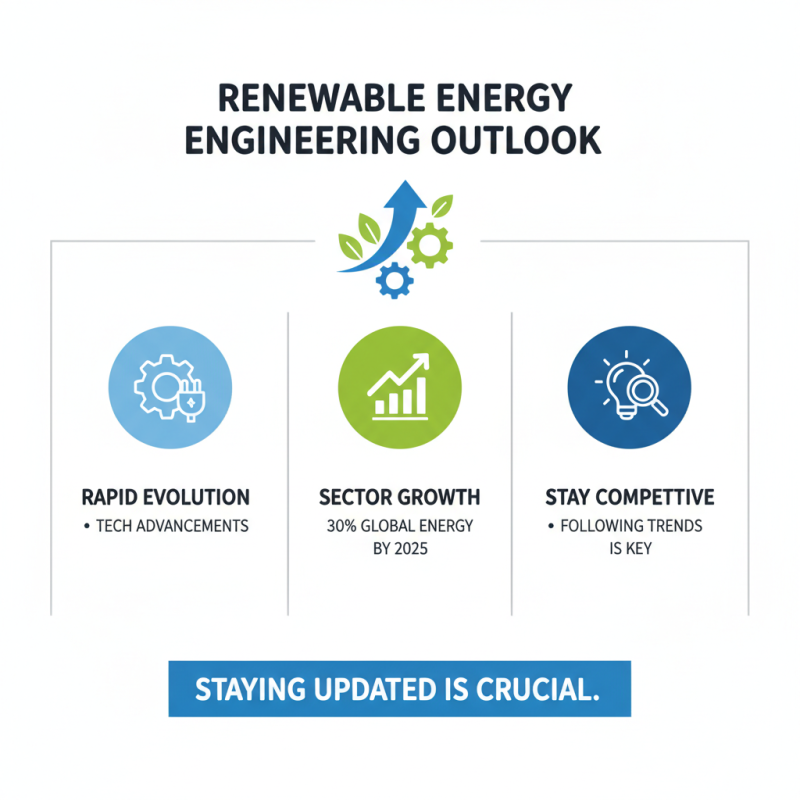
Staying updated in renewable energy engineering is crucial. The field evolves quickly due to technological advancements. Reports suggest that the renewable energy sector is projected to grow significantly. By 2025, it could account for 30% of global energy demand. Engineers must follow emerging trends to stay competitive.
Continuing education plays a vital role in this pursuit. Many professionals opt for online courses and certifications related to solar, wind, and energy storage systems. Data from industry surveys indicate that nearly 70% of engineers engaged in further training to enhance their skills. Networking with peers and attending workshops also foster knowledge sharing.
However, the challenge remains in balancing work and education. Time constraints can hinder progress for many engineers. Additionally, not all training programs keep pace with industry changes. Some may become outdated quickly. It’s essential to choose resources that align with current market needs. Engaging with professional organizations can help engineers navigate this evolving landscape effectively.