Renewable gas is gaining attention among buyers seeking lower-carbon energy for industry, transport, and heating. In China, suppliers may offer biomethane, project development, upgrading equipment, or related technical services. These offerings are not interchangeable. A buyer comparing suppliers should look beyond production capacity and ask how gas quality, feedstock sourcing, and delivery arrangements fit the intended use. Small details matter: a plant’s connection point, seasonal feedstock availability, and the distance to a customer can shape a project’s real costs.
This guide introduces considerations for identifying China-based renewable gas suppliers serving global buyers. It focuses on practical checks, including product specifications, traceability, emissions data, operating experience, and export support. Request current documents and clarify which claims have been independently verified. A polished brochure is not evidence of consistent performance. Nor does a large announced project guarantee available supply. No supplier is best for every route. That distinction is easy to miss. Buyers should compare proposals against their own technical, commercial, and reporting requirements, then confirm details directly with the supplier. Even a careful comparison has limits: data may vary by project and market, and assumptions deserve review. The aim is not to promise a perfect match, but to help buyers ask sharper questions before engaging potential partners.
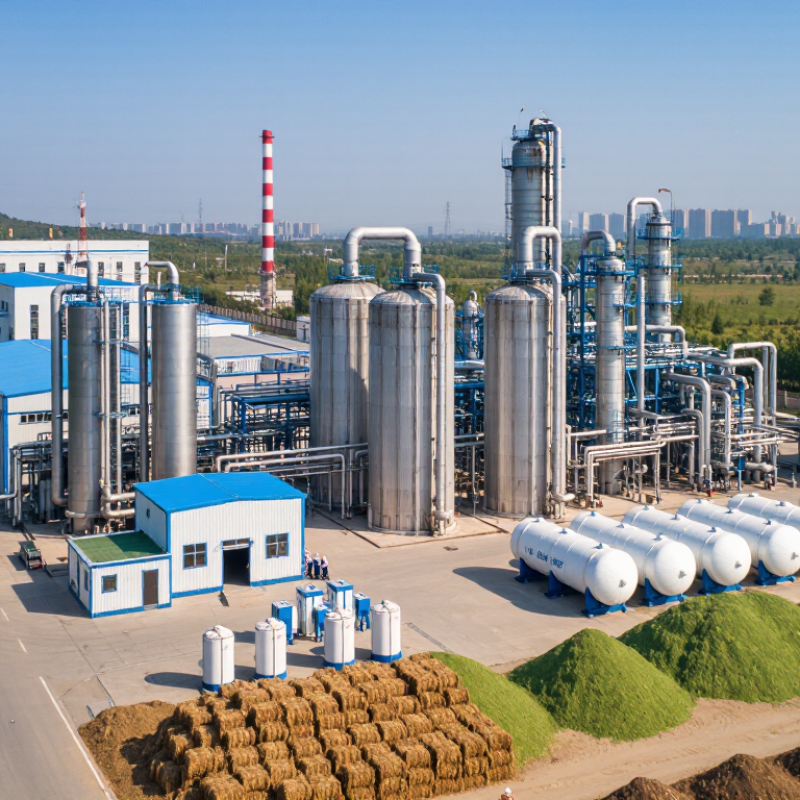
China’s renewable-gas market draws on crop residues, livestock manure, food waste, and wastewater sludge. These feedstocks are processed in anaerobic digesters, producing raw biogas and nutrient-rich digestate. Raw biogas contains methane, carbon dioxide, and moisture, so its composition can vary between plants.
The International Energy Agency’s 2020 Outlook for Biogas and Biomethane estimated global production at about 35 million tonnes of oil equivalent. A modest share.
For global buyers, key products include raw biogas for nearby heat or power use, and upgraded biomethane for gas-grid injection or transport fuel. Upgrading removes carbon dioxide and other impurities; buyers should request current methane-content, moisture, and contaminant test results. Digestate may also be sold as a soil amendment, subject to local quality requirements.
The IEA report highlights substantial untapped potential from organic waste, but potential is not the same as dependable supply. A truck schedule can look tidy on paper; seasonal feedstock shortages can still disrupt output. China’s market is diverse, and public data may not capture every facility consistently, so verify plant capacity, operating history, and delivery specifications directly.
Renewable gas in China is commonly made from organic waste, including crop residues, livestock manure, and food-processing by-products. In controlled digesters, microorganisms break down this material without oxygen and produce biogas. Small details matter. Feedstock moisture and seasonal availability can affect output, so production is not perfectly uniform.
Before supply, operators typically remove moisture, hydrogen sulfide, and much of the carbon dioxide from raw biogas. The upgraded gas, often called biomethane, can then be checked for composition and pressure. Depending on site infrastructure, it may enter a gas network or travel in containers by road. For global buyers, ask suppliers for recent test results, feedstock details, and clear delivery specifications. Quality checks are essential. Documentation can vary between projects, so confirm requirements before arranging shipment.
Tips: Request a sample analysis and ask how often the supplier tests gas quality. Check whether transport, storage, and delivery volumes are clearly stated. Do not assume every facility uses the same process; confirm the details directly.
Selecting a Chinese renewable gas supplier begins with evidence, not polished brochures. Ask whether feedstock sources are documented, such as food waste, agricultural residues, or wastewater sludge. A credible supplier should explain its digestion or upgrading process, expected methane content, and contaminant controls. Request recent laboratory reports, not just target specifications. Small details matter. Check sample dates, test methods, and whether an independent laboratory conducted the tests. Visit the production site when practical. Observe feedstock storage, gas treatment equipment, safety routines, and maintenance records. A remote presentation cannot show everything. Ask for proof.
For cross-border projects, evaluate delivery reliability alongside gas quality. Confirm monthly volumes, storage limits, loading arrangements, and contingency plans for equipment downtime. Ask how methane leakage is measured and reported, and whether emissions data can be traced to specific batches. Documentation should align across contracts, test reports, and shipment records. Check the basics. Compare supplier claims with customer references and a sample shipment, where feasible. A certificate does not prove every operating condition. It is one useful check. Some suppliers may have strong engineering but uneven reporting; that deserves a direct conversation, not an automatic rejection. Clear answers, corrective actions, and realistic timelines are better signs than flawless promises.
Global buyers comparing renewable gas suppliers should look beyond advertised output. Strong supplier profiles explain feedstock sources, production routes, and delivery formats. Some facilities process agricultural residues; others recover gas from wastewater or organic waste. These differences affect supply consistency, traceability, and upgrading requirements. Ask for biomethane specifications, monthly production ranges, and representative test data. Small details matter. Clear information about seasonal feedstock changes is more useful than a broad capacity claim.
Capabilities extend beyond production. Check whether the supplier operates gas cleaning, compression, storage, and transport, or relies on partners. Review quality controls for methane content, moisture, sulfur compounds, and pressure. Request recent independent test results and a clear explanation of sampling frequency. Credible profiles describe limitations as well as strengths. A profile may omit downtime history or transport constraints; buyers should flag those gaps instead of assuming perfect reliability. No profile answers everything.
Tips: Compare suppliers using the same data points. Confirm delivery capacity, quality records, and contingency plans before discussing long-term volumes.
A technical benchmark for comparing supplier capabilities across renewable gas processing stages.
Methane concentration is one useful capability indicator: raw biogas commonly contains about 45–75% methane, while upgraded biomethane typically exceeds 90%. Actual composition varies with feedstock and processing technology; buyers should confirm product specifications with suppliers.
For global buyers, a renewable gas offer is only useful when its quality can be verified. Ask suppliers for recent test reports covering methane content, moisture, hydrogen sulfide, and heating value. Results should identify sampling dates and test methods, not just list target figures. Small details matter.
Export documents and product specifications need to match the destination market. Requirements vary by country and by whether the gas travels as compressed gas, liquefied biomethane, or through a pipeline. Buyers should confirm applicable customs, safety, and emissions documentation with qualified local advisers before signing. A certificate alone may not settle every question. Independent inspection before loading can help reconcile the contract specification with the delivered batch.
Logistics deserve the same scrutiny as price. Confirm packaging compatibility, loading facilities, transit time, storage conditions, and who pays for delays or rejected cargo. For liquefied shipments, temperature control and boil-off management affect usable volume. For cylinder shipments, valve standards and safe handling procedures need clear written agreement. Request a sample document pack and a realistic delivery schedule. One honest concern: supplier capacity can change with feedstock availability, so buyers should ask how production interruptions are communicated and documented. A neat brochure cannot replace a workable contingency plan.
Buyer guide: This table describes supplier and project types rather than naming companies. Availability, product quality, export eligibility, and delivery options must be confirmed with each prospective supplier and the relevant authorities in the destination market.
| Supplier or Project Type | Typical Feedstock | Potential Renewable Gas Product | Export Standards and Quality Checks | Logistics to Assess | Buyer Due Diligence |
|---|---|---|---|---|---|
| Anaerobic digestion plant operators | Food-processing residues, food waste, and other biodegradable organic materials. | Biogas for local use, or upgraded biomethane where upgrading and suitable offtake infrastructure are available. | Request a recent, batch-specific certificate of analysis (COA). Check methane content, carbon dioxide, oxygen, hydrogen sulfide, water dew point, and calorific value against the destination market’s specification. | Confirm whether product is delivered by pipeline, compressed gas transport, or another approved form. Verify available loading facilities and the receiving terminal’s requirements. | Confirm feedstock traceability, production volumes, plant operating status, product ownership, and whether supply is firm or subject to seasonal variation. |
| Agricultural and livestock-waste projects | Livestock manure and agricultural residues suitable for anaerobic digestion. | Biogas or, if upgraded and tested, biomethane for an appropriate local or export supply chain. | Ask for the product specification and independent test results. Confirm contaminant limits and measurement methods with the intended end user; specifications vary by application and jurisdiction. | Assess collection distance from feedstock sources, plant-to-loading-point transport, and the availability of compatible compression or liquefaction facilities. | Review feedstock sourcing records, continuity of supply, environmental permits, and evidence supporting any claimed renewable origin or emissions attributes. |
| Municipal wastewater and organic-waste projects | Wastewater-treatment sludge and separately collected organic municipal waste. | Biogas for heat or power; biomethane may be available where an upgrading system and suitable distribution route exist. | Check for application-specific contaminants, including hydrogen sulfide and, where relevant to the intended use, siloxanes. Require testing protocols and results from a qualified laboratory. | Check whether the facility is connected to a gas network or can load gas in a transportable form. Confirm local permits and the receiving country’s import and transport rules. | Establish whether the gas is available for sale, who holds the relevant rights, and how production, quality, and delivery interruptions are handled contractually. |
| Landfill-gas recovery projects | Gas collected from decomposing organic material at landfills. | Recovered landfill gas for energy use; upgraded biomethane is possible where gas treatment and project economics support it. | Require composition data and contaminant testing appropriate to the proposed use. Confirm that the product meets the buyer’s gas-quality specification rather than relying on a generic “renewable gas” description. | Evaluate the location of the landfill, processing plant, and loading or pipeline connection. Confirm permitted transport conditions for the selected product form. | Review gas collection and treatment records, expected production profile, environmental approvals, and documentation of the project’s renewable-gas attributes. |
| Biomethane upgrading and integrated project operators | Biogas from digestion or other eligible organic sources, processed to remove unwanted components. | Biomethane intended for a compatible gas network, industrial use, or vehicle-fuel application, subject to local specifications and approvals. | Compare the supplier’s specification with the importing market’s rules. Standards such as EN 16723-1 (gas injected into natural gas networks) and EN 16723-2 (automotive fuel) apply in their relevant contexts; they are not universal export approvals. | Agree the delivery form and point of transfer, then verify pressure, temperature, metering, custody-transfer procedures, loading compatibility, and destination infrastructure. | Request commissioning and operating records, quality-control procedures, calibration records, a sample COA, and a clear process for off-specification product. |
| Aggregators and cross-border trading intermediaries | Gas sourced from one or more production facilities; feedstock depends on the underlying projects. | Contracted biogas or biomethane, depending on the source, product specification, and available transport chain. | Obtain source-level COAs and traceability documents. Confirm that any sustainability or emissions claim is supported by a recognized scheme accepted by the buyer’s jurisdiction. | Clarify which party arranges export clearance, freight, insurance, loading, import clearance, and delivery at the named contractual location. | Verify the intermediary’s authority to sell the gas, identify the production source, check contract performance protections, and confirm applicable customs classification with a qualified customs broker. |
| Area | What to Request or Confirm |
|---|---|
| Product quality | Written product specification, recent COA, sampling and testing method, measurement units, acceptance limits, and remedies for off-specification deliveries. |
| Origin and sustainability | Production-site details, feedstock records, chain-of-custody evidence, and documentation required by the buyer’s specific renewable-gas or emissions-accounting scheme. |
| Export and import compliance | Confirm applicable export controls, import permits, customs classification, product labeling, safety documentation, and any destination-specific gas-quality requirements with relevant authorities and qualified advisers. |
| Shipping and delivery | Specify delivery form, loading and unloading facilities, transport responsibilities, insurance, custody transfer, metering, delivery schedule, and the agreed Incoterms® rule and named place. |
| Commercial terms | Define volume tolerance, pricing basis, payment security, force majeure, quality disputes, delivery delays, contract duration, and governing law before placing an order. |
Note: Biomethane export feasibility depends on the specific production facility, gas quality, transport infrastructure, and current rules in both the exporting and importing jurisdictions. Standards and permits should be checked for the product’s intended end use and destination.