Top 10 Energy Storage Technologies for Global Buyers Today?
As the demand for sustainable energy solutions grows, the landscape of energy storage technologies is evolving rapidly. Experts like Dr. Emily Carter, a leading authority in the field, emphasize the critical role of these innovations. She once stated, “Energy storage technologies are the backbone of a sustainable energy future.” This highlights the significance of finding efficient and reliable storage options.
Recent developments showcase various advancements in this sector. Battery technologies, such as lithium-ion and solid-state batteries, are leading the way. However, concerns about longevity and environmental impacts persist. Emerging solutions, like flow batteries and compressed air storage, offer promising alternatives. Yet, these technologies require further research and investment to fully realize their potential.
Moreover, the challenge remains to balance efficiency and cost. Many companies are racing to develop cheaper and more effective energy storage methods. As the industry navigates this complex landscape, it's essential to critically assess both the successes and shortcomings. Understanding these nuances will help buyers make informed decisions in today’s dynamic market.

Overview of Energy Storage Technologies and Their Importance in 2023
Energy storage technologies play a crucial role in today's energy landscape. They help stabilize power grids, support renewable energy integration, and enhance energy efficiency. According to a report by Allied Market Research, the global energy storage market is projected to reach $500 billion by 2030, driven by demand for clean energy solutions.
One prominent technology is lithium-ion batteries, which dominate the market due to their efficiency and declining costs. They represent about 85% of the current energy storage capacity. Emerging alternatives like solid-state batteries show promise for higher energy density and safety, though they are still in developmental stages. Importantly, technologies such as pumped hydro storage continue to dominate in large-scale applications, underscoring the need for diverse storage solutions.
When selecting energy storage options, consider your specific energy needs. Assess factors like capacity, efficiency, and lifecycle cost. Understanding local regulations and incentives is essential for cost-effectiveness. Additionally, stay informed on technological advancements, as the landscape evolves rapidly. Adopting the right storage technology can make a significant impact on your energy strategy.
Current Market Trends and Adoption Rates of Energy Storage Solutions
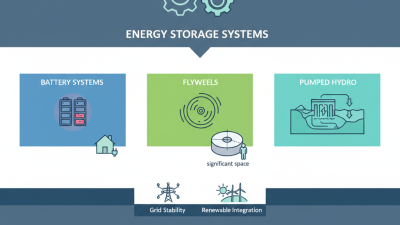
The energy storage market is evolving rapidly. With increasing demand for renewable energy, adoption rates for energy storage solutions are surging. Recent studies show that lithium-ion batteries dominate the market, holding a significant share. However, other technologies like flow batteries and flywheels are gaining traction. Each solution has its unique advantages and challenges, impacting their appeal to global buyers.
In regions rich in solar and wind energy, energy storage acts as a buffer. This support is crucial for managing intermittent supply. Customers look for reliable solutions that balance cost, efficiency, and longevity. The volatility in raw material prices can influence buyer decisions. For instance, high demand for lithium may trigger supply chain issues. Additionally, while some technologies boast quick discharge rates, they may fall short in capacity and lifespan, necessitating careful evaluation.
Trends indicate a move towards diversified energy portfolios. Buyers increasingly consider long-term viability over short-term gains. The complexity of integrating various storage technologies into existing grids poses challenges. As the market matures, ongoing research is vital in addressing these gaps. Customers must continuously assess the evolving landscape to make informed choices.
Comparative Analysis of Lithium-Ion vs. Alternative Battery Technologies
The choice of battery technology plays a crucial role in energy storage systems today.
Lithium-ion batteries lead the market with around 80% of global capacity. They are favored due to their high energy density and efficiency. A report from the International Energy Agency indicates that lithium-ion batteries have reduced in cost by about 89% since 2010. This is a huge incentive for many buyers.
However, alternative technologies are making strides. Solid-state batteries, for instance, promise greater safety and higher energy density than their lithium-ion counterparts. A study forecasts that they could reduce costs by up to 30% by 2030. Other options like flow batteries and sodium-ion batteries offer improved longevity and sustainability. Flow batteries can last over 10,000 charge cycles, compared to around 1,500 for lithium-ion batteries. This longevity makes them appealing for large-scale applications.
Despite their advantages, lithium-ion batteries are not without flaws. The extraction of lithium has environmental implications, raising concerns among stakeholders. Many emerging technologies face similar challenges and may take years to scale effectively. Ongoing research is critical to address these issues. As the market evolves, understanding the strengths and weaknesses of these technologies will be vital for informed decision-making.
Emerging Technologies: Solid-State Batteries and Their Potential Impact
Solid-state batteries are gaining attention in energy storage technology. They offer higher energy density and enhanced safety compared to traditional lithium-ion batteries. These batteries use solid electrolytes, which drastically reduce the risk of leaks and fires.
Their compact design also allows for more energy to be stored in smaller spaces.
However, challenges remain. The production process can be complex and expensive. There are also questions regarding the scalability of this technology for mass market adoption. Although ongoing research aims to address these issues, it may take several years before solid-state batteries become widely available.
Manufacturers need to streamline production while maintaining safety and performance standards.
The potential impact of solid-state batteries is significant. They could revolutionize electric vehicles and renewable energy integration. Their higher efficiency would help in reducing carbon emissions. Yet, it is crucial to reflect on the ethical aspects and sustainability of their materials.
The industry must strive for transparency and environmental responsibility during development.
Economic Insights: Cost-Effectiveness and ROI of Energy Storage Systems
The economic landscape of energy storage systems has evolved significantly in recent years. Cost-effectiveness plays a critical role in decision-making for global buyers. Many technologies demonstrate varying levels of return on investment (ROI), driving importance in evaluating long-term benefits. For instance, lithium-ion batteries have emerged as a popular choice. Their scalability and efficiency seem appealing, yet initial costs remain a barrier for some users.
When considering ROI, buyers must account for total lifecycle costs. Maintenance, longevity, and energy efficiency cannot be overlooked. Alternative technologies, like pumped hydro storage, boast lower operational costs but require substantial upfront investment. This disparity can lead to difficult choices. The balance between upfront investment and long-term savings is crucial.
Reflecting on future developments is equally important. Advances in materials and processes could shift the cost-effectiveness landscape. However, the market can be unpredictable. Stakeholders should remain cautious yet optimistic. Continuous assessment of emerging technologies helps buyers make informed decisions. Ultimately, understanding the economic dynamics of energy storage is essential for maximizing investments.