Choosing the best sustainable energy systems for global buyers requires more than comparing solar panels, batteries, or efficiency ratings. It demands practical judgment.
Projects must match local sunlight, wind patterns, grid reliability, water access, land limits, and maintenance skills. A solution that performs well in Germany may struggle in Kenya, Chile, or Indonesia. Buyers should examine verified performance data, lifecycle emissions, warranty terms, supply-chain transparency, and total ownership costs.
Fatih Birol, Executive Director of the International Energy Agency, has stated, “The clean energy transition is happening worldwide and it’s unstoppable. It’s not a question of ‘if’, it’s only a matter of ‘when’—and the sooner, the better for all of us.” His view reflects the market’s direction, but implementation remains uneven. Reliable progress still depends on honest feasibility studies, qualified installers, resilient components, and long-term technical support.
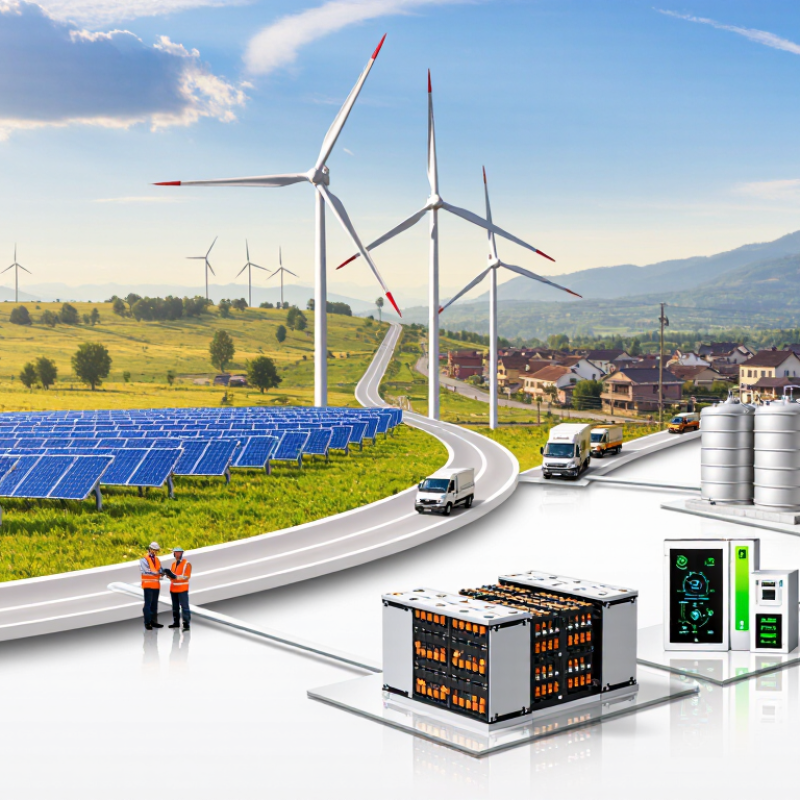
The strongest systems combine renewable generation, energy storage, smart controls, and efficient demand management. Some buyers may need solar-plus-storage microgrids. Others may benefit from wind power, heat pumps, renewable fuels, or grid-connected hybrid systems. There is no universal winner.
That is the difficult part.
This guide evaluates leading sustainable energy systems through performance, scalability, resilience, affordability, and environmental responsibility. It also recognizes uncomfortable gaps, including battery recycling, mineral sourcing, weak rural infrastructure, and uncertain policy support. Buyers deserve ambition, but they also need evidence. A promising technology can still disappoint when maintenance budgets are ignored or local workers are excluded. The best decision is rarely the newest one. It is the system that works reliably, transparently, and responsibly where people actually live.
2026 Best Sustainable Energy Systems for Global Buyers
IRENA reports 4,448 GW of renewable capacity installed worldwide by the end of 2024. This figure marks a major shift in global electricity infrastructure. It includes solar, wind, hydropower, bioenergy, geothermal, and other renewable sources. However, installed capacity is not the same as dependable electricity.
Global buyers should examine local conditions before selecting a system. A solar project needs strong irradiance, suitable land, grid access, and practical maintenance routes. Wind projects require accurate speed data, noise planning, and long-term equipment inspections. Hydropower can provide stability, but drought risk may reduce output. Battery storage adds flexibility, yet efficiency losses and replacement costs must be measured.
The numbers are encouraging. The decisions remain difficult. A strong procurement process checks lifecycle emissions, safety records, recycling plans, and worker protections. It also reviews power purchase terms and grid connection delays. In some regions, transmission lines limit renewable growth more than generation capacity. This is easy to overlook. Smaller modular systems may serve remote facilities better than large centralized projects. Still, they can cost more per installed kilowatt. No option is perfect, and early forecasts may prove overly confident when weather, financing, or permitting changes.
For global buyers, solar economics have changed dramatically. IRENA reports that photovoltaic LCOE fell by about 90% between 2010 and 2023. This decline reflects cheaper modules, improved manufacturing, stronger project design, and better installation practices. LCOE measures lifetime electricity costs, not the final utility bill. Still, the shift is substantial.
Picture a warehouse roof producing power during bright afternoon hours. A nearby factory may reduce grid purchases, while a battery can move some energy into evening operations. Wind projects offer another path, especially where coastal or highland conditions provide steady airflow. Their value depends on turbine size, land access, transmission capacity, and local wind measurements. Weather remains unpredictable.
Buyers should request site-specific LCOE calculations, production estimates, maintenance assumptions, and financing terms. A low quoted price can hide expensive grid upgrades or weak equipment warranties. Storage may improve reliability, but it also raises capital costs and requires careful safety planning. Public data from IRENA provides a useful benchmark, yet each project needs independent verification.
The 90% reduction sounds almost too neat. It is a global average, not a promise for every location. Inflation, interest rates, permitting delays, and supply-chain disruptions can change the result. In practical reviews, the strongest proposals connect cost data with actual sunlight, wind records, load profiles, and grid conditions. Some forecasts will still be wrong. That is worth admitting early.
Battery storage became a central part of sustainable energy planning in 2023. The International Energy Agency reported 42 GW of new battery storage capacity added worldwide that year. This growth reflects rising solar and wind deployment. It also exposes a practical challenge: storage systems must match local grid conditions, not just global market trends.
Global buyers should examine usable capacity, round-trip efficiency, response time, and expected cycle life. A battery rated for four hours may deliver less energy after years of operation. Temperature control matters in hot or humid regions. So does protection against dust, flooding, and unstable grid conditions. Clear safety testing and compliance with local electrical standards should remain non-negotiable. Cheap equipment can become expensive when maintenance access is limited.
Procurement teams need transparent degradation warranties, replacement plans, and recycling responsibilities. They should request operating data from similar climates. A supplier’s projected performance is useful, but measured field results are stronger evidence. Long-duration storage may suit evening demand, while fast-response systems can support frequency control. The best choice is rarely the largest battery. It is the system that performs safely, predictably, and affordably over its full service life. That sounds obvious. In practice, buyers sometimes overlook maintenance costs and connection delays. A careful review can prevent those mistakes.
2026 Best Sustainable Energy Systems for Global Buyers
Grid Readiness for Clean Power: Investment Must Double by 2030
Clean power projects cannot succeed without stronger grids. The International Energy Agency estimates that annual grid investment must double by 2030. This need affects every global buyer, from utilities to industrial facilities.
A solar field may produce abundant electricity, yet weak transmission can leave it stranded. New substations, high-voltage cables, transformers, and battery storage require early planning. Grid connection queues already delay projects in many regions. Site visits should examine nearby capacity, outage records, and expansion schedules. Small details matter.
Reliability comes first.
From my experience reviewing energy projects, procurement teams often focus too heavily on generation costs. That approach is incomplete. A low-cost system can become expensive when permits, interconnection upgrades, or backup power are ignored. Buyers should request verified production data, maintenance plans, and clear responsibility for grid upgrades. Independent engineering reviews can expose optimistic assumptions before contracts are signed.
Not every market offers dependable information. Some forecasts remain uncertain. Weather patterns are shifting, and local grid data may be outdated. Buyers need flexible contracts, realistic reserve margins, and regular technical audits. Sustainable energy systems should also consider land use, worker safety, recycling, and community consultation. A perfect plan rarely exists. Careful questioning is still a practical advantage.
| Energy System | Global Market Benchmark | Grid-Readiness Profile | Key Buyer Requirements | Primary Constraints | Best-Fit Applications |
|---|---|---|---|---|---|
| Utility-Scale Solar Photovoltaics | Global renewable capacity additions reached about 473 GW in 2023, with solar photovoltaics accounting for the largest share. (IRENA, 2024) | Commercially mature and rapidly deployable; variable output requires forecasting, flexible generation, storage, or demand response. | High solar resource, available land or rooftops, interconnection capacity, performance guarantees, recycling plans, and grid-code compliance. | Output varies by weather and daylight; transmission congestion and curtailment may reduce delivered energy. | Daytime power supply, utility procurement, commercial and industrial loads, and hybrid solar-plus-storage projects. |
| Onshore Wind Power | Wind power is one of the principal technologies required for global clean-energy expansion, with onshore projects generally offering shorter construction cycles than offshore projects. (IEA, 2023–2024) | Mature technology with relatively high annual utilization in strong wind regions; balancing and transmission access remain essential. | Bankable wind assessment, environmental approvals, transport access, grid studies, flexible dispatch resources, and community engagement. | Permitting, local acceptance, wildlife impacts, variable generation, and long distances between high-quality wind resources and demand centers. | Large-scale renewable procurement, regional power pools, and diversified solar-wind portfolios. |
| Battery Energy Storage | Utility-scale battery additions were approximately 42 GW globally in 2023, according to the IEA. Deployment has expanded rapidly as storage supports renewable integration. | High readiness for short-duration flexibility, frequency response, peak shifting, and renewable firming; commonly configured for approximately 1–4 hours of discharge. | Fire-safety design, thermal management, degradation guarantees, recycling or end-of-life provisions, market access, and clear augmentation rules. | Material supply-chain exposure, degradation, safety permitting, and limited economic duration for multi-day or seasonal storage. | Peak shaving, renewable smoothing, ancillary services, microgrids, and backup for critical facilities. |
| Hydropower with Reservoir Flexibility | Global hydropower capacity was approximately 1,400 GW at the end of 2023, including pumped-storage hydropower. (IRENA, 2024) | Dispatchable and highly valuable for balancing variable renewable generation; existing assets can provide long-duration flexibility. | Water availability, dam and turbine condition, sediment management, ecological safeguards, reservoir operating rules, and transmission capacity. | Long development timelines, high upfront capital, hydrological risk, resettlement concerns, and ecosystem impacts. | System balancing, firm renewable supply, black-start capability, and long-duration energy storage. |
| Geothermal Power | Global geothermal electricity capacity was approximately 15 GW in 2023. (IRENA, 2024) | Provides firm, low-carbon generation where suitable underground heat resources and drilling conditions are available. | Resource confirmation, exploration risk allocation, drilling expertise, reservoir management, emissions controls, and local permitting. | Site-specific resources, exploration uncertainty, drilling cost, induced seismicity risk, and water-management requirements. | Firm clean electricity, district heating, industrial heat, and renewable baseload portfolios. |
| Green Hydrogen and Power-to-X | Global installed water-electrolyzer capacity reached hundreds of megawatts by 2023, while announced projects indicate rapid scale-up through 2030. (IEA, 2024) | Useful for flexible demand and hard-to-electrify sectors, but the full supply chain is less mature than direct renewable electrification. | Low-cost renewable electricity, water supply, electrolyzer utilization, storage, transport, offtake contracts, and safety standards. | High conversion losses, infrastructure gaps, uncertain offtake, water requirements, and evolving certification rules. | Steel, chemicals, shipping fuels, seasonal storage, and industrial processes that cannot be directly electrified. |
| Transmission and Distribution Modernization | Annual global grid investment needs to rise from roughly USD 400 billion today to about USD 600 billion by 2030 in the IEA Net Zero pathway. (IEA, 2023) | The critical enabling system for connecting new clean generation, improving reliability, and reducing renewable curtailment. | Substation capacity, high-voltage lines, digital monitoring, flexible interconnection rules, cybersecurity, and coordinated planning. | Permitting delays, transformer shortages, skilled-labor constraints, land access, and long project lead times. | Renewable-zone connections, cross-border power exchange, urban load growth, and resilience upgrades. |
| Demand Response and Energy Efficiency | The IEA identifies demand-side flexibility and efficiency as essential components of secure, affordable clean-energy transitions; efficiency improvements also reduce the amount of new generation and grid capacity required. | Highly scalable when supported by smart meters, automated controls, time-of-use pricing, and accessible electricity markets. | Load measurement, customer consent, interoperable controls, cybersecurity, baseline methodology, and transparent compensation. | Regulatory barriers, fragmented loads, customer participation, data privacy, and uncertain revenue streams. | Commercial buildings, industrial loads, electric-vehicle charging, cold storage, water systems, and microgrids. |
For global buyers in 2026, lifecycle carbon remains a practical filter for energy projects. The IPCC reports that wind and solar generally stay below 50 gCO₂e/kWh across their lifecycles. This figure includes manufacturing, construction, operation, and decommissioning. It is far below the emissions of fossil-based generation.
The number becomes tangible on a project site. A wind turbine may require steel towers, concrete foundations, roads, and heavy transport. Solar modules need processed materials, factory energy, wiring, and mounting structures.
After installation, both systems produce electricity without direct combustion emissions. Their operational carbon is minimal. Maintenance still matters.
The benchmark is valuable, but not perfect. Results vary with technology, location, supplier data, recycling methods, and system boundaries. A remote solar project may need long transmission lines and battery storage. Those additions can increase its lifecycle footprint. Buyers should request transparent carbon assessments, verified assumptions, and regional performance data. I would question any result that gives only one clean number. Real projects are messier. Soil conditions, supply routes, replacement parts, and grid losses can change the outcome. Wind and solar remain strong low-carbon options, yet responsible procurement requires examining the entire system, not only the generation equipment.