Global energy purchasing is changing quickly. Renewable energy is no longer a niche option for utilities, manufacturers, or commercial property owners. It is becoming a core procurement decision.
The International Energy Agency’s Renewables 2024 report forecasts nearly 5,500 gigawatts of new renewable capacity worldwide between 2024 and 2030. Solar photovoltaic and wind power are expected to provide most of that growth. The agency also identifies permitting, grid connection, financing, and supply-chain constraints as continuing challenges. Growth is impressive. Execution is harder.
IRENA reported that renewables represented 92.5% of global power-capacity expansion in 2024. Global renewable capacity reached approximately 4,448 gigawatts by year-end. These figures support stronger buyer confidence, but they do not guarantee identical results in every market. A sunny site may still lack transmission capacity. A windy project may require costly balancing systems. Hydropower can offer stability, yet drought risks deserve serious attention.
This guide compares ten renewable energy types for global buyers, including solar, wind, hydropower, geothermal, biomass, and emerging marine technologies. Each option has a different operating profile, investment requirement, environmental footprint, and technology maturity. Buyers should examine lifetime costs, not only advertised prices. They should also verify guarantees of origin, equipment quality, maintenance support, and local regulations.
The numbers are clear. The choices are not.
Some projects will underperform. That possibility matters. A practical decision should combine independent data, site experience, supplier due diligence, and realistic grid assumptions. This ranking provides a useful starting point, while acknowledging that the best technology depends on location, demand patterns, risk tolerance, and long-term energy strategy.
Renewable energy categories shape how global buyers assess cost, reliability, and supply risk.
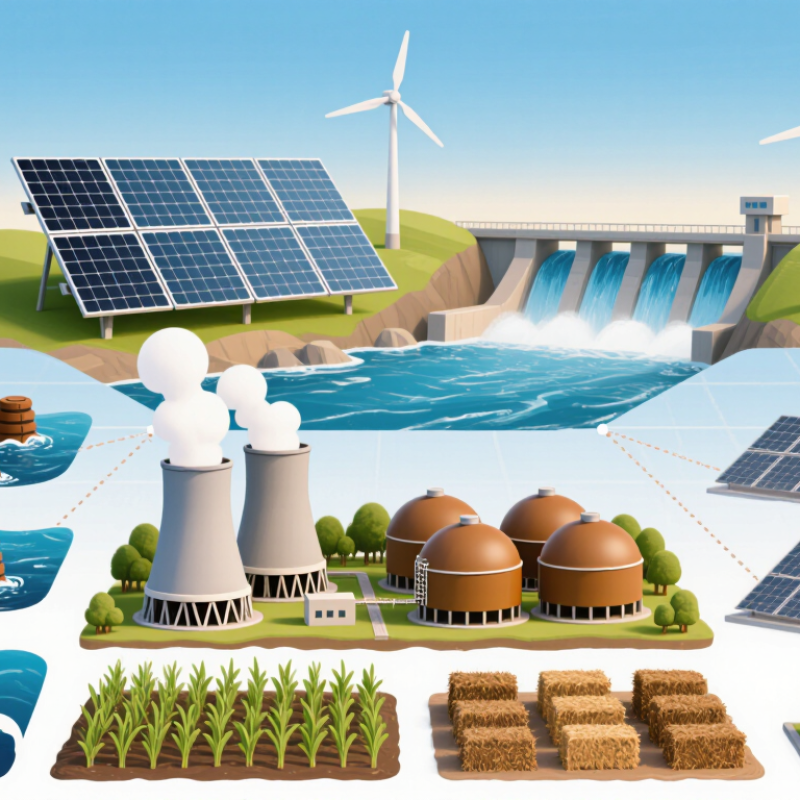
The top ten include solar, wind, hydropower, geothermal, biomass, biogas, tidal, wave, ocean thermal, and renewable-powered hydrogen. Each serves a different market role. Solar panels suit warehouses, farms, and remote clinics. Wind projects support large grids where strong, steady air currents exist. Hydropower offers flexible electricity, but drought can reduce output. Geothermal plants provide stable generation near suitable underground heat sources.
These categories also influence trade routes and investment decisions. Solar equipment often moves through international supply chains, while hydropower depends heavily on local geography. Biomass and biogas can convert agricultural waste into useful heat or electricity. Tidal and wave systems remain less mature, with higher maintenance challenges in saltwater. Renewable-powered hydrogen may support steel, shipping, and chemical production, yet storage and transport remain expensive. Ocean thermal power has potential in tropical regions, although commercial deployment is still limited. Market data changes quickly. Buyers should question impressive forecasts.
Tips: Compare lifetime cost, not only purchase price. Check seasonal output using local weather records. Review grid access, maintenance skills, spare-part availability, and certification requirements. Request measured performance data from operating projects. A smaller system may prove more dependable than a larger one with weak local support. Do not treat every renewable category as equally practical.
Solar, wind, and hydropower lead the renewable energy choices for international buyers. However, each project needs local evidence, not global assumptions.
IRENA’s Renewable Capacity Statistics 2024 recorded 473 GW of renewable additions in 2023. Solar reached about 1,419 GW worldwide, while wind exceeded 1,017 GW. Hydropower remained substantial, with approximately 1,260 GW installed. These figures show scale, but they do not guarantee strong returns for every location.
Solar projects suit regions with reliable sunlight, available land, and stable grid access.
Wind projects require measured wind speeds, seasonal data, and careful turbine placement.
Hydropower can provide steady electricity, yet rainfall patterns and environmental safeguards require serious assessment.
The IEA’s Renewables 2024 report expects solar and wind to provide most new renewable capacity through 2030. Still, transmission delays, curtailment, and storage costs can weaken an otherwise attractive plan. Numbers can mislead.
Tips:
Request at least twelve months of site data, plus independent energy-yield estimates. Compare equipment efficiency, degradation rates, maintenance access, financing terms, and end-of-life plans. For hydropower, examine river flow records and sediment risks. For wind, check extreme-weather conditions. For solar, inspect land quality and seasonal shading. A low purchase price may hide higher lifetime costs. Early assumptions are often wrong, and experienced buyers should leave room for revision.
Geothermal energy offers steady power where underground heat is accessible. Volcanic regions in Indonesia, East Africa, and parts of Europe show strong potential. Buyers should examine drilling depth, reservoir pressure, and reinjection plans. A well-designed plant can provide stable electricity, but exploration remains expensive and uncertain. Site data matters more than attractive forecasts.
Ocean energy includes tidal streams, waves, and ocean thermal systems. Coastal buyers may value predictable tidal movement, especially near narrow channels. However, saltwater corrosion, difficult maintenance, and subsea cable damage can increase operating costs. Wave projects need careful testing because storms can expose weak equipment. The ocean is powerful.
Bioenergy converts agricultural residues, forestry waste, and organic municipal materials into heat, gas, or electricity. Rice husks in Southeast Asia, sugarcane residues in South America, and animal waste in rural Europe can support local systems. Reliable feedstock contracts are essential. Poor storage can cause moisture, odors, and lower efficiency. Some early assessments also overestimate available waste. Buyers should verify seasonal supply, transport distances, emissions controls, and community acceptance before investing.
Global buyers are expanding beyond solar and wind. IRENA’s Renewable Capacity Statistics 2024 recorded 473 gigawatts of renewable capacity added in 2023. Hydrogen is gaining attention because it can serve industries that direct electrification cannot easily reach. The IEA’s Global Hydrogen Review 2024 estimated global hydrogen demand at about 97 million tonnes in 2023. However, low-emissions hydrogen still represented less than 1% of supply. The opportunity is substantial, but readiness varies sharply.
Emerging options deserve practical testing. Geothermal energy can provide steady power for facilities near suitable underground resources. Biogas can convert agricultural waste into heat, electricity, or transport fuel. Tidal and wave systems may support coastal operations, although maintenance costs remain difficult. Green hydrogen can store surplus renewable electricity and supply high-temperature industrial processes. Yet electrolyser utilization, water availability, transport, and certification can change project economics. Forecasts can disappoint. Buyers should request measured performance data, not only projected capacity.
Tips: Compare delivered energy costs, carbon intensity, water demand, and uptime. Ask for independent verification and a five-year maintenance plan. Start with a controlled pilot. The IEA reports that announced low-emissions hydrogen projects could expand significantly by 2030, but many still face financing and infrastructure delays. A sensible procurement plan should therefore combine firm renewable power with flexible technologies. It should also include realistic failure assumptions, because early projects rarely perform perfectly.
Commercial readiness is shown on a 1–9 Technology Readiness Level scale, where 9 represents proven, widely deployable commercial technology. Renewable hydrogen is included as an energy carrier produced using renewable electricity, while tidal, wave, and enhanced geothermal technologies remain at earlier commercial stages.
Top 10 Renewable Energy Types for Global Buyers
Comparing renewable energy systems requires more than checking advertised capacity. Solar photovoltaic, solar thermal, onshore wind, offshore wind, hydropower, geothermal, biomass, biogas, tidal energy, and wave energy each suit different conditions. Green hydrogen also deserves attention, but it is an energy carrier, not a primary source. Buyers should examine local sunlight, wind speed, water access, land quality, and seasonal demand. A coastal site may favor wind or tidal power, while a dry inland facility may perform better with solar and storage. Output forecasts should use measured data, not optimistic assumptions. Reliability matters more than impressive peak figures.
Tips: Request production estimates, degradation rates, maintenance schedules, and component test records. Compare total lifecycle cost, not only purchase price. Include batteries or other storage when supply interruptions affect operations. Review grid connection rules, permits, recycling plans, insurance, and local service capacity. Ask who responds when an inverter fails during extreme weather. Small details become expensive quickly.
A credible evaluation also checks safety documentation, performance guarantees, payment terms, and supplier experience in similar climates. Independent certification can strengthen confidence, but it cannot replace site inspections. Hydropower may offer steady output, yet environmental limits can affect approval. Biomass can use local residues, although fuel quality may change each month. No scorecard is perfect. Buyers should record uncertainty instead of hiding it, then test sensitive assumptions with conservative scenarios. A cheaper system can become costly when transmission upgrades, land preparation, or replacement parts are overlooked.
| Renewable Energy Type | Primary Resource and Conversion Technology | Typical Capacity Factor | Dispatchability | Commercial Maturity | Main Advantages | Key Limitations and Risks | Critical Purchasing Criteria | Best-Fit Applications |
|---|---|---|---|---|---|---|---|---|
| Solar Photovoltaic (PV) | Sunlight converted directly into electricity using semiconductor modules, inverters and mounting systems. | Approximately 15%–30%, depending on solar irradiation, system design, tracking and grid availability. | Variable; output follows daylight and weather. Batteries or other flexibility resources can improve supply matching. | Very high | Modular, scalable, rapidly deployable, low operating requirements and suitable for rooftops, commercial sites and utility-scale projects. | Intermittent generation, land or roof-area requirements, performance degradation, curtailment risk and exposure to extreme weather. | Module efficiency, temperature coefficient, degradation warranty, inverter quality, structural design, local solar resource, fire safety and recycling provisions. | Residential and commercial rooftops, distributed generation, utility-scale solar parks, microgrids and hybrid solar-storage systems. |
| Concentrated Solar Power (CSP) | Mirrors concentrate solar heat to produce steam or another thermal cycle for electricity generation. | Approximately 30%–60%; thermal storage can increase annual utilization and evening output. | Moderately dispatchable when integrated with thermal energy storage; requires strong direct normal irradiance. | High, site-specific | Can provide renewable power after sunset, supports thermal storage and may offer synchronous generation characteristics. | Higher capital complexity, large land requirement, water demand for some cooling designs and limited suitability in cloudy regions. | Direct normal irradiance, storage duration, cooling method, water availability, heat-transfer system, construction quality and grid interconnection. | Large-scale generation in high-sun regions, dispatchable renewable power and industrial heat applications. |
| Onshore Wind | Wind turbines convert the kinetic energy of land-based wind into electricity. | Approximately 30%–50%, depending on wind speed, turbine size, wake effects and site elevation. | Variable; short-term forecasting, geographic diversity, storage and flexible demand can reduce balancing requirements. | Very high | Competitive generation in suitable locations, relatively small direct land footprint and strong performance in high-wind corridors. | Variable output, permitting and community acceptance challenges, visual and noise impacts, wildlife considerations and transmission needs. | Wind resource assessment, turbine hub height, power curve, availability guarantee, foundation conditions, logistics, noise limits and grid code compliance. | Utility-scale projects, corporate power purchase agreements, regional grids and hybrid wind-storage plants. |
| Offshore Wind | Large wind turbines installed in marine environments, using fixed-bottom or floating foundations. | Approximately 40%–60%, commonly higher than onshore wind because of stronger and more consistent offshore winds. | Variable; output forecasting and grid flexibility remain necessary. | High, with floating technology developing | High energy yield, proximity to coastal demand centers and potential for large-scale generation. | High construction and maintenance complexity, marine corrosion, expensive subsea cables, port constraints and environmental permitting. | Wind and metocean data, seabed conditions, foundation type, vessel and port access, cable design, corrosion protection and maintenance strategy. | Large coastal power systems, densely populated regions and offshore industrial or hydrogen projects. |
| Hydropower | Moving or stored water drives turbines connected to electrical generators. | Approximately 30%–60%, with substantial variation by hydrology, reservoir design and operating policy. | High for reservoir and pumped-storage facilities; run-of-river systems are more dependent on water flow. | Very high | Long operating life, high efficiency, grid balancing capability and, for reservoirs, energy storage potential. | Large projects can affect ecosystems and communities; drought, sedimentation, construction delays and geological risks may affect output. | Hydrology, water rights, reservoir operating rules, environmental and social safeguards, dam safety, sediment management and transmission access. | Firm renewable generation, grid flexibility, seasonal storage and electricity systems with suitable rivers or elevation differences. |
| Geothermal Energy | Heat from the Earth produces steam or hot fluid for electricity generation or direct thermal use. | Approximately 70%–95% for well-designed electricity projects with an adequate geothermal resource. | Generally high; plants can provide steady output, subject to reservoir management and maintenance requirements. | High in suitable regions | Reliable baseload or flexible renewable power, small surface footprint and potential for combined heat and power. | Resource exploration risk, drilling costs, induced seismicity concerns, corrosive fluids and location constraints. | Resource temperature and flow, well test results, drilling success probability, reinjection design, reservoir sustainability and regulatory approvals. | Regions with accessible high-temperature resources, district heating, industrial heat and firm low-carbon generation. |
| Solid Biomass Power | Organic materials such as sustainably sourced residues or energy crops are combusted or gasified to produce heat and electricity. | Approximately 60%–85% when operated as a high-utilization plant. | High and controllable, provided fuel inventory and supply logistics are secure. | High, feedstock-dependent | Dispatchable renewable generation, potential use of agricultural or forestry residues and combined heat and power capability. | Air emissions, fuel-price exposure, storage and transport requirements, sustainability concerns and competition for land or feedstocks. | Feedstock origin and sustainability, moisture content, calorific value, long-term supply contracts, emissions controls, ash management and transport distance. | Combined heat and power, industrial facilities, district heating and grids with reliable sustainable residue supplies. |
| Biogas and Biomethane | Organic waste is anaerobically digested to produce biogas, which can generate electricity or be upgraded to biomethane. | Approximately 50%–85% for electricity plants with consistent feedstock and high availability. | High; gas storage and engine flexibility can support peak or balancing power. | High, feedstock-dependent | Converts waste into energy, can reduce uncontrolled methane emissions and offers flexible generation or renewable gas production. | Feedstock collection and contamination risks, methane leakage, digestate management, gas-cleaning requirements and variable supply quality. | Feedstock contracts, methane leakage controls, gas upgrading quality, digestate handling, odor management, grid standards and sustainability verification. | Wastewater plants, farms, food-processing facilities, municipal waste systems, flexible power generation and renewable gas networks. |
| Tidal Stream Energy | Underwater turbines convert predictable tidal currents into electricity. | Approximately 30%–45% at strong-resource sites; actual performance depends on tidal flow and array layout. | Highly predictable, although generation varies with tidal cycles and is not continuous. | Emerging | Predictable output, high energy density in suitable channels and low visual impact compared with many land-based projects. | Limited suitable sites, subsea installation and maintenance challenges, marine corrosion, biofouling and environmental permitting. | Tidal-flow measurements, survivability design, subsea cables, installation vessels, maintenance access, navigation safety and marine ecosystem studies. | Island grids, coastal communities and demonstration or commercial projects in high-current channels. |
| Wave Energy | Devices capture the mechanical energy of ocean waves and convert it into electricity. | Approximately 20%–40% for early commercial systems, with strong variation by wave climate and technology. | Variable but forecastable over short periods; output follows changing wave conditions. | Emerging | Potentially complementary to wind and solar, substantial resource in some coastal zones and limited surface land use. | Harsh marine conditions, technology durability, subsea cable costs, maintenance access and limited long-term operating data. | Wave resource assessment, survivability in extreme storms, mooring system, power take-off efficiency, deployment method and maintenance plan. | Remote coastal and island systems, research-to-commercial projects and hybrid marine renewable energy installations. |

Note: Capacity-factor ranges are indicative global ranges rather than guarantees. Actual performance, lifecycle emissions, cost and project feasibility depend on resource quality, system design, financing, permitting, grid conditions, supply chain and local environmental requirements. Buyers should require independently verified resource studies, performance guarantees, lifecycle assessments and long-term operation and maintenance plans.