
10 Tips for Choosing Renewable Energy Courses Worldwide?
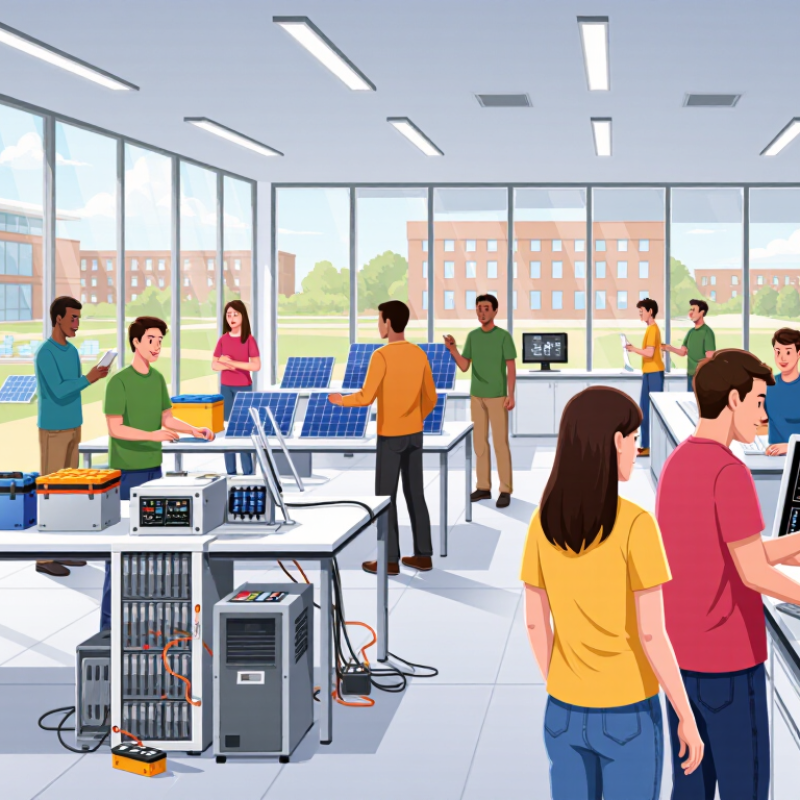
Choosing among renewable energy courses worldwide is not simply a matter of selecting the highest-ranked university. A strong program should connect theory with practice, including solar laboratories, wind-turbine simulations, battery testing, grid planning, and field-based projects. Students should examine accreditation, faculty experience, industry partnerships, graduate outcomes, tuition, living costs, and language requirements. Course content also matters. Some programs focus on engineering, while others emphasize energy policy, finance, climate science, or community development. The best choice depends on your career direction and previous training.
Fatih Birol, Executive Director of the International Energy Agency, has said, “The transition to clean energy is happening worldwide and it’s unstoppable.” His observation gives this topic urgency, but it should not replace careful evaluation. Renewable energy courses differ greatly in laboratory access, regional relevance, and employer recognition. A course in Denmark may emphasize offshore wind, while one in Australia may focus on solar systems and remote-grid design. That distinction matters. Rankings can mislead. A famous institution may offer limited practical training, while a smaller college may provide valuable industry placements. Students should also question their assumptions about “green” careers. Not every course leads directly to an engineering role, and some require advanced mathematics or programming. Reviewing module descriptions, speaking with alumni, and checking verified employment data can reveal uncomfortable gaps. This guide presents ten practical tips for comparing renewable energy courses with greater confidence, realism, and professional judgment.
Define Course Scope Against IRENA’s 2023 Renewable Capacity Growth of 13.9%
Renewable energy courses should be measured against market scale, not attractive titles. IRENA’s Renewable Capacity Statistics 2024 reports 473 GW of new renewable capacity in 2023, a 13.9% annual increase. That pace changes what competent training must cover. Look for modules on solar, wind, hydropower, bioenergy, storage, grids, finance, and permitting. Real scope matters. Ask whether lessons explain how projects move from resource assessment to safe operation.
The IEA’s Renewables 2023 analysis expects global renewable capacity to expand by 2,400 GW during 2022–2027. A serious course should therefore teach forecasting, flexibility, and integration, not only panel installation. Check the syllabus for measured laboratory work, field data, and transparent assessment. Practical exercises might compare wind-speed records, battery round-trip efficiency, and seasonal solar output. These details reveal expertise. Accredited instructors, current grid codes, and cited datasets strengthen credibility.
Still, many courses promise global relevance while using one country’s regulations. That weakness deserves scrutiny. Compare course outcomes with IRENA’s 2023 growth figure, then test whether regional examples match the learner’s target market. Include lifecycle emissions, land use, community consultation, and end-of-life planning. I would question any curriculum that treats 13.9% as a permanent trend. Growth can slow, and technologies change. That uncertainty should appear in the coursework.
| No. | Course-Selection Dimension | Verified 2023 Renewable-Energy Benchmark | Recommended Course Scope | Evidence to Look For |
|---|---|---|---|---|
| 1 | Overall market context | 13.9% growth in global renewable power capacity in 2023, with approximately 473 GW added during the year. | Choose a course that explains capacity growth, deployment drivers, investment trends, grid integration and energy-policy fundamentals. | Current global statistics, policy analysis, capacity-market exercises and updated case studies. |
| 2 | Technology coverage | Solar power contributed approximately 345.5 GW of new renewable capacity in 2023, making it the largest source of additions. | Ensure the syllabus includes photovoltaic system design, solar resource assessment, project economics and operations. | Modules covering system sizing, yield estimation, degradation, storage interaction and lifecycle performance. |
| 3 | Wind-energy competence | Wind power added approximately 116.6 GW globally in 2023. | Look for both onshore and offshore wind topics, including resource assessment, turbine fundamentals, siting and environmental constraints. | Wind-speed analysis, capacity-factor calculations, turbine selection and permitting exercises. |
| 4 | Hydropower literacy | Hydropower added approximately 27.3 GW in 2023, excluding pumped-storage capacity from the renewable additions total. | Select programs that address river-basin planning, hydrology, dam safety, environmental impacts and flexible generation. | Hydrological data interpretation, water-use conflicts, sustainability assessment and basic plant economics. |
| 5 | Bioenergy and geothermal scope | Bioenergy added approximately 6.8 GW, while geothermal power added approximately 0.4 GW in 2023. | Choose breadth that covers feedstock sustainability, bioenergy conversion, geothermal resources and site-specific feasibility. | Resource-screening methods, emissions accounting, land-use analysis and technology-comparison assignments. |
| 6 | Grid integration | Renewables represented approximately 3,870 GW of global installed power capacity at the end of 2023. | Prioritize power-systems content covering transmission, distribution, forecasting, curtailment, balancing and interconnection. | Load-flow concepts, renewable forecasting, grid-code interpretation and integration simulations. |
| 7 | Energy-storage application | Rapid variable-renewable deployment increases the importance of flexibility, including batteries, pumped storage, demand response and power-to-hydrogen. | Choose courses that connect storage technology with duration, round-trip efficiency, degradation, dispatch and project revenue models. | Storage-sizing exercises, dispatch optimisation, levelised-cost comparisons and safety content. |
| 8 | Geographic transferability | Renewable resources differ substantially by solar irradiation, wind regime, hydrology, land availability, grid strength and regulation. | Select courses using examples from more than one climate zone and power-market structure rather than relying on a single-country context. | Multi-region datasets, GIS or resource-mapping tasks and comparisons of policy and permitting frameworks. |
| 9 | Economics and project finance | Capacity growth depends on capital cost, financing conditions, auction design, power prices, transmission access and policy certainty. | Include financial modelling, levelised cost of electricity, weighted average cost of capital, sensitivity analysis and risk allocation. | Bankability assessments, discounted-cash-flow models, procurement scenarios and sensitivity tables. |
| 10 | Sustainability and implementation | Renewable projects require consideration of land, biodiversity, water, materials, communities, end-of-life treatment and emissions across the lifecycle. | Choose a course that combines engineering with environmental assessment, social safeguards, circularity and responsible project delivery. | Lifecycle assessment, stakeholder mapping, environmental-impact review and decommissioning or recycling plans. |
| Data basis: International Renewable Energy Agency, Renewable Capacity Statistics 2024, reporting global renewable-capacity additions and installed capacity for 2023. Technology figures are rounded approximately to one decimal gigawatt where applicable. | ||||
Related Posts
-

Why Should You Enroll in Renewable Energy Courses Now?
-
Exploring Modern Energy: Innovations Driving Sustainable Future Solutions
-

What is Renewable Energy and Why Does It Matter for China?
-

China Top Energy Storage System Solutions for Global Buyers?
-

How to Choose the Best Energy Sources for Global Sourcing?
-
2026 Best Energy Transition Solutions for Global Buyers?