Renewable energy sources draw on natural flows that replenish over time, but they do not perform equally everywhere. Sunlight can turn a rooftop into a small power station, while steady coastal winds may support large offshore turbines. Rivers, underground heat, organic materials, tides, and waves offer other ways to produce useful energy. This guide explores ten prominent options and explains how each works in practical terms.
The comparison considers more than electricity output. Availability, cost, land or water needs, storage, and effects on nearby communities all matter. Hydropower can provide dependable power, yet dams may alter river habitats. Solar panels are quiet and increasingly common, but their output falls after sunset. There are trade-offs.
A useful overview should distinguish established technologies from options still developing. It should also avoid treating every renewable project as automatically clean or suitable. A technology’s real-world impact depends on its design, location, materials, and operation. Even a simple ranking can be misleading; local conditions often matter more than a global top-ten label. The following discussion gives readers a grounded starting point for comparing renewable energy sources, asking better questions, and understanding where each approach may fit.
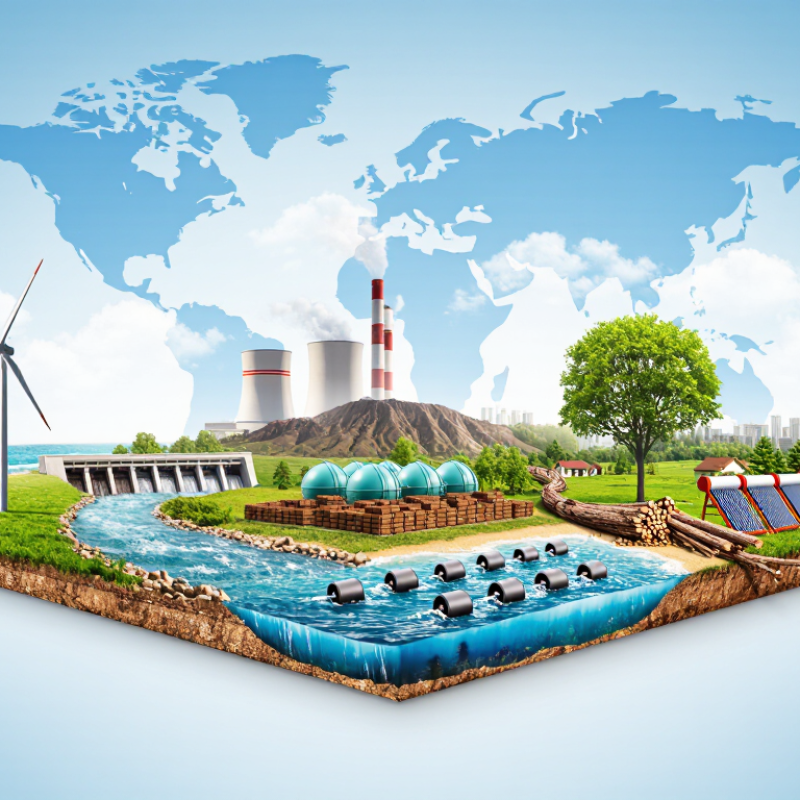
What Are the Top 10 Renewable Energy Sources?
Renewable Energy: Definition and Core Principles
Renewable energy draws on natural flows that replenish on human timescales. Examples include sunlight, wind, flowing water, geothermal heat, and sustainably sourced biomass. Unlike fossil fuels, these resources are replenished, though their availability can vary. A rooftop panel needs daylight; a wind turbine needs usable wind. That matters. The International Renewable Energy Agency reported 3,870 gigawatts of global renewable power capacity at the end of 2023. Its Renewable Capacity Statistics 2024 recorded 473 gigawatts of new capacity that year, with renewables representing 86% of additions.
At its core, renewable energy converts a replenishing resource into electricity or heat. But “renewable” does not mean impact-free. Dams can reshape river flows; biomass can compete for land; and panels and turbines require materials and grid connections. The IPCC’s 2022 Sixth Assessment Report evaluates energy options through lifecycle emissions and wider environmental effects. That wider view is essential. Storage and transmission matter, too, because sunlight and wind fluctuate. Even a strong local resource can be wasted without a route to users.
Tips: Check seasonal output, land and water needs, storage requirements, and grid access. Compare full-system impacts, not just the electricity generated at the site.
| Renewable Energy Source | Core Principle | Common Uses | Key Consideration |
|---|---|---|---|
| Solar Photovoltaic (PV) | Photovoltaic cells convert sunlight directly into electricity. | Electricity for homes, businesses, utilities, and off-grid systems. | Output varies with sunlight, weather, season, and time of day; storage or grid support can help balance supply. |
| Solar Thermal | Solar collectors capture sunlight as heat; concentrated solar power systems focus sunlight to produce high-temperature heat and, often, electricity. | Water and space heating, industrial heat, and electricity generation. | Performance depends on solar conditions. Concentrated solar power generally works best in sunny locations with strong direct sunlight. |
| Wind | Turbines turn the kinetic energy of moving air into electricity, on land or offshore. | Utility-scale electricity and, in some cases, local or off-grid power. | Generation varies with wind conditions; site selection and consideration of wildlife, noise, and visual effects are important. |
| Hydropower | Moving or falling water drives turbines connected to electrical generators. | Electricity from reservoirs, run-of-river systems, and smaller water-power installations. | Output depends on water availability. Dams and reservoirs can affect river ecosystems, fish migration, and nearby communities. |
| Geothermal Energy | Heat from within the Earth is used directly or converted into electricity, often using underground hot water or steam. | Electricity, district heating, and direct heat for buildings or industrial processes. | Power generation is most practical where suitable underground heat and geology are accessible; projects require careful site assessment. |
| Solid Biomass | Organic materials, such as sustainably sourced wood residues and agricultural by-products, are used to produce heat or electricity. | Heating, electricity generation, and some industrial processes. | Climate benefits depend on feedstock, land use, harvesting practices, and emissions controls; biomass is not automatically carbon-neutral. |
| Biogas | Microorganisms break down organic matter without oxygen, producing a methane-rich gas that can be used for energy. | Heat, electricity, or upgraded gas for suitable fuel applications. | Capturing gas from manure, wastewater, and food or agricultural waste can limit methane releases, but leakage must be controlled. |
| Tidal Energy | Tidal-range systems use differences in water level; tidal-stream systems use the movement of tidal currents to drive turbines. | Electricity generation in coastal locations with suitable tidal conditions. | Tides are highly predictable, but viable sites are limited and installations must account for marine ecosystems and navigation. |
| Wave Energy | Devices capture the movement of ocean waves and convert it into mechanical energy and then electricity. | Potential electricity supply for coastal areas and marine applications. | Technology is less established than solar or wind, and devices must withstand harsh marine conditions while limiting ecological impacts. |
| Ambient Heat | Heat pumps move naturally occurring heat from the air, ground, or water into buildings; electricity is used to operate the system. | Space heating and cooling, and water heating. | Efficiency depends on the system, local conditions, building design, and electricity supply; a heat pump transfers heat rather than generating it by combustion. |
Renewable energy comes from sources that are naturally replenished on human timescales. This is a selection of widely used and developing renewable energy technologies, not a ranked list; suitability and environmental effects vary by location and project.
Solar photovoltaic panels turn sunlight directly into electricity; solar thermal systems capture heat for water or power generation. Onshore wind turbines use land-based breezes, while offshore turbines draw on stronger coastal winds. Hydropower generates electricity from moving water, often through dams or river-based systems. Some are weather-dependent.
Geothermal energy taps heat beneath the ground, providing steady power where suitable resources exist. Biomass uses organic material, such as wood waste or crop residues, but its climate benefits depend on how that material is sourced and replaced. Biogas captures methane from decomposing waste and can be used for heat or electricity. Tidal energy harnesses predictable ocean movements; wave energy converts the motion of surface waves. Both are still less widely deployed than wind or solar.
These ten options differ in cost, location, and reliability. A sunny rooftop suits solar panels, while a windy coastline may favor offshore turbines. Hydropower can respond quickly to changing demand, but dams may alter river habitats. The labels are not perfectly neat: biomass and biogas rely on stored organic matter, unlike sunlight or wind. That distinction matters. A useful comparison asks not only how much energy a source produces, but also what local resources and trade-offs it requires.
Renewable energy starts as sunlight, moving air, flowing water, underground heat, or organic material. Each source needs a conversion system before it can power a lamp or turn a motor. Photovoltaic panels use semiconductor cells to produce electricity when light strikes them. Solar-thermal collectors capture heat for water or steam. Wind turbines turn rotor motion into electricity, while hydropower uses falling or flowing water to spin turbines. The equipment matters.
Other pathways use less visible flows. Geothermal plants bring underground heat to the surface, where steam or hot fluids drive generators. Solid biomass can release heat through controlled combustion; biogas captures methane from decomposing organic waste and burns it for heat or power. Tidal turbines harvest predictable currents, while wave devices capture the rise and fall of the sea. Ocean-thermal systems use temperature differences between warm surface water and colder deep water. These pathways vary widely in scale and reliability.
Conversion also means managing timing and losses. A turbine may produce power when demand is low, so batteries or other storage can help shift electricity to later hours. Not always neatly. Local conditions matter: a dry season can reduce hydropower, and poorly managed biomass can strain forests or soils. Even a technically efficient system may need transmission lines, maintenance, and a suitable site. The natural flow is only the beginning; useful power depends on how carefully each step is designed.
Solar power is widely available, especially on sunny rooftops, and installation costs have fallen, though batteries add expense. Panels need minerals and land, and output drops at night. Onshore wind is often inexpensive where winds are steady; turbines can affect wildlife and nearby views. Offshore wind taps stronger coastal winds but costs more to build and maintain. Hydropower can provide dependable electricity where rivers and reservoirs are suitable, yet dams alter habitats and may displace communities. Geothermal energy runs steadily in suitable regions, but drilling is costly and location-specific. Site matters.
Sustainably sourced biomass can use crop residues or wood, but burning it still releases air pollution and carbon. Biogas from manure or food scraps can supply heat and power; collection systems require investment, and leaks undermine climate benefits. Tidal power is predictable, though equipment is expensive and could disturb marine habitats. Wave energy uses moving seas, but devices face rough conditions and remain less widely deployed. Ocean thermal energy conversion draws on warm surface water and cooler depths; it is promising in tropical seas, but infrastructure costs are high. Comparing costs is imperfect: financing, grid connections, storage, and local ecology can change which option makes sense.
Comparing typical availability, costs, and lifecycle greenhouse-gas emissions. Capacity factor is the share of a plant’s maximum possible output produced over time; it is a useful, but imperfect, availability indicator.
At a glance: Geothermal and bioenergy can provide steady output, while wind and solar output varies with weather and time of day. Hydropower is dispatchable where water and reservoirs are available. New-build costs are comparatively well tracked for major technologies, but global cost benchmarks for rooftop solar, tidal, and wave power are not yet directly comparable. Lifecycle emissions are generally far below fossil-fuel generation, though bioenergy’s footprint varies substantially with feedstock and land-use effects.
| Renewable source | Indicative capacity factor | Global weighted-average LCOE, 2023 (USD/kWh) | Lifecycle emissions (g CO₂e/kWh) |
|---|---|---|---|
| Hydropower | 45% | 0.057 | 24 |
| Geothermal | 90% | 0.071 | 38 |
| Bioenergy | 80% | 0.082 | 230 |
| Offshore wind | 45% | 0.075 | 12 |
| Onshore wind | 35% | 0.033 | 11 |
| Tidal energy | 30% (indicative) | No comparable global benchmark | Limited comparable lifecycle data |
| Wave energy | 25% (indicative) | No comparable global benchmark | Limited comparable lifecycle data |
| Concentrated solar power | 40% | 0.118 | 27 |
| Utility-scale solar PV | 25% | 0.044 | 41 |
| Rooftop solar PV | 18% | No comparable global benchmark | About 41 |
Capacity factors are representative estimates, not guaranteed values; actual performance depends on location, plant design, and operating conditions. Tidal and wave estimates are especially uncertain because commercial deployment remains limited. LCOE figures are global weighted averages for newly commissioned projects in 2023, not household electricity prices. Lifecycle emissions are representative medians from life-cycle assessments; biomass results vary widely with sourcing and land-use assumptions. References: IRENA, Renewable Power Generation Costs in 2023; IPCC lifecycle-emissions assessment.
Renewable sources serve different roles, not just different landscapes. Solar photovoltaic panels turn daylight into electricity, often close to homes and businesses. Concentrated solar power uses mirrors to heat a fluid, and some plants store that heat for evening generation. Onshore wind is often among the lower-cost options in windy regions, while offshore turbines can draw stronger, steadier winds near coasts. Timing matters.
Hydropower can respond quickly to changes in demand, although dams alter rivers and depend on local water conditions. Geothermal plants provide steady power where underground heat is accessible; geothermal heat pumps can instead warm and cool buildings. Sustainable biomass can supply heat or electricity when other sources dip, but its climate impact depends on how feedstocks are grown and replaced. Biogas, made from organic waste, can provide fuel for heat, power, or existing gas networks. The details matter.
Tidal power follows predictable cycles, making it useful in a few suitable coastal locations, though construction and upkeep remain challenging. Wave energy captures motion at sea, but devices are still developing and face harsh conditions. These sources are not interchangeable. A sunny inland grid may lean on solar and storage; a windy coast may balance offshore wind with flexible hydro or other firm power. No single mix fits every place, and real systems rarely work as neatly as diagrams suggest.